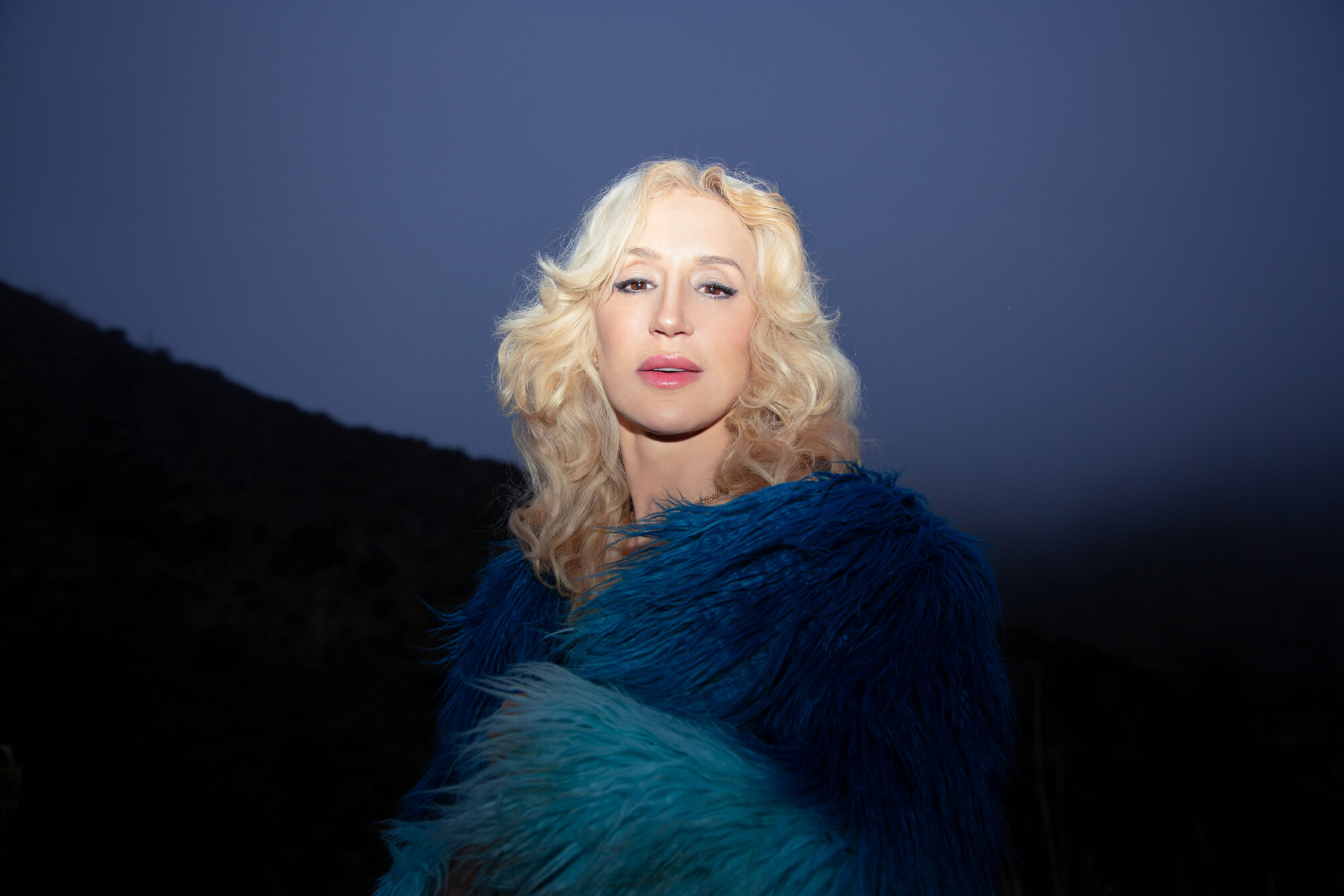
With a career spanning electronic music, pop, songwriting, and some of the most memorable moments in dance music, JES has built her artistic journey around one constant: an unwavering love for the song. From growing up surrounded by records in New York City to performing on international stages, collaborating with Tiësto, forming Motorcycle, and co-writing the iconic “As the Rush Comes,” her career has continually evolved without being confined to a single genre.
Now, with her latest single, “(You Make Every Day Feel Like) Sunday,” JES explores a lighter, more carefree side of songwriting, embracing love, happiness, presence, and the simple moments that make life meaningful. In this conversation with LOCK Magazine, she reflects on the experiences that shaped her, the artists and sounds that continue to inspire her, her creative process, resilience as a woman in the music industry, and why staying true to your own voice matters more than ever.
—
Can you tell us a bit about your musical background and how you got started in music?
Music has been a passion for as long as I can remember. My parents had a wide variety of records, so there was always music in the house: pop, R&B, classical, rock, jazz, blues, you name it, they had it. My objective was to know every word to every song. I’d practice singing along to all the records, mimicking the inflections and learning the techniques I heard. Living in New York City, there was so much music and so many cool things going on, and I definitely took advantage of it. I would sneak out to clubs to hear house music and go to all kinds of concerts. I’d say I was mostly into R&B, rock, and pop, but I developed an early appreciation for great songs and great songwriting. Because we had a piano and guitars in the house, I also started writing songs at a young age. At about 15, I started answering ads in the newspaper for band auditions, and although I was young, I came close on a few. Then I found an ad from a producer and actually went to his house. He offered to record a song for me free of charge. Once I heard it back, that was a defining moment for me because I truly believed I could do it. From that moment on, I never looked back. It was such a dream to hear myself on tape that I became obsessed with creating songs, singing, and performing. From there, it became the kind of twisting, turning story you might expect. I sang in hotels and clubs, moved to Los Angeles and reinvented myself, discovered EDM, worked in studios, and got to be around amazing musicians. Mixed in with all of that were plenty of ups and downs, but I just kept going because I loved it.
Who are some of your biggest musical influences, both past and present?
I always get asked this question, and my answer is always changing because I am! I’ve never really been someone who is obsessed with just one artist. I’ve always fallen in love with the songs, the personas, the style, and the emotional feeling they create. The music that inspires me is a huge mix of styles, genres, voices, and moments, so it’s hard to narrow it down. Growing up, some of the artists who made a real impression on me were Blondie, Billy Joel, Madonna, Whitney Houston, Van Morrison, Tears for Fears, TLC, David Bowie, Peter Gabriel, Stevie Nicks, The Rolling Stones, Johnny Cash, The Clash, the Eagles, Radiohead, Roberta Flack, The Fugees, Dolly Parton, Alanis Morissette, Kate Bush, Björk, The Cure, Depeche Mode, massive Attack and so many more. Quite a wide range! I’m sure I’m forgetting plenty, and if you asked me again next week, the list would probably be different. That’s the beauty of music. There is always something new to discover, or a song that suddenly comes on the radio and reminds you why you loved it in the first place. As far as more current artists, I’m inspired by anyone who brings a real point of view and emotional honesty to what they do. Artists like Lana Del Rey, Billie Eilish, Sia, Florence + The Machine, London Grammar, Hozier, SZA, The Weeknd, Lorde, RAYE, Fred again and Ed Sheeran. They all connect with me in different ways because they create a world around their music. For me, it’s always about the feeling first: the voice, the song, the atmosphere, and whether it stays with you after it ends.
Tell us about your new single “(You Make Every Day Feel Like) Sunday.”
“(You Make Every Day Feel Like) Sunday” is a song about being carefree, feeling at peace, being relaxed, being in love, leaving the world behind, staying present, and embracing happiness. Basically, it’s about all the things I’m not, haha, but always strive for and look forward to! It’s about that state of bliss where you can let go and simply enjoy the moment. Musically, I wanted it to feel warm, open, and effortless, like sunlight coming through the windows on a day when you don’t have to be anywhere. There’s a softness to the melody and a looseness in the rhythm that helped guide the lyrics. I love when a song can create a feeling before you even fully process the words, and with this one, I wanted the music and vocals to feel like an exhale. I love writing songs that try to tap into something deeper and bring those feelings out of you, and I think I approached this one from a different frame of mind. It was new for me to write about fun, joy, and those lighter, more uncomplicated moments in life. I hope it makes people think about their own special moments, the ones that may seem small at the time but end up meaning everything.
Are there any specific artists or bands that have had a significant impact on your music style or approach?
I find inspiration, ideas, and little creative sparks in so many different artists and places, but I think developing a unique and individual creative voice has been the most important thing for me, so I wouldn’t say there is one specific band or artist that has directly influenced my style or approach. I love watching live performances, going to concerts, and seeing behind-the-scenes footage or in-studio videos that show how songs are made. I also love hearing people talk about their creative processes and making music; that always sets me off and can make me reflect on what I’m working on. Recently, I was listening to Jack Antonoff and Rick Rubin talk about their creative processes. Those kinds of things always put me in a very creative space. I’m inspired by the work ethic, discipline, and creative vision of artists like David Bowie, and those qualities definitely trigger something in my own music. Keeping an open mind and continuing to develop your craft in your own way have always been incredibly important to me.
Could you share any memorable moments or experiences that have shaped your musical journey so far?
I feel like it’s one big conglomeration of hundreds, maybe thousands, of memorable moments all mixed, and they all build on top of each other, but there are a few that stick out. Every experience I’ve had so far has definitely shaped me in some way, and I’m grateful for all of them, good and bad. I’ve been lucky enough to travel and perform in many parts of the world, meet fans from so many different cultures, and I always try to learn something everywhere I go. One big moment for me was finding a Tiësto flyer in Miami. I decided to write to him and ask if I could perform a song that I had on one of his mix albums. To my surprise, he said yes, and that led to many other wonderful things, including touring with him and collaborating. Meeting Dave Dreeden at an LA club, where I was singing with another artist, was one of those destiny moments that changed everything. The very next week, Dave and I got together with our other collaborator, John Gabriel. We formed the band Motorcycle, and together we wrote: “As the Rush Comes.” That chance meeting led to one of the most defining chapters of my career and proved that sometimes a single moment can change the course of your life. Playing the NEC Arena was unforgettable because it was the first time I performed “As the Rush Comes.” I didn’t know people even knew the song, yet all 10,000 people were singing with me! Appearing on Top of the Pops was completely eye-opening. Performing at the Beijing Olympics for Coca-Cola was another incredible milestone and collaboration that connected me with artists from China and led to us working together on a collaboration piece for the Olympics. Hearing my song on the radio for the first time was just as important as making my first recording. It made everything feel real. Moving to Los Angeles changed my life. I was suddenly surrounded by a completely different musical culture than I had known in New York City. It wasn’t an easy move, but I knew I needed the change. I took on all kinds of odd jobs to get by, and eventually started working in a recording studio, where I met incredible musicians and got to watch firsthand how they approached songwriting, recording, and producing. It was like an education you couldn’t get anywhere else. Those were years of hustling, playing all the clubs there, finding my way, and learning my craft every day, night after night. Looking back, those experiences shaped me just as much as any success I’ve had. They taught me resilience, helped me get a thick skin (which I didn’t have when I started), gave me confidence, and helped me find my own voice as an artist. Even now, every show changes me a little. Every audience, every city, and every connection leave an impression and makes me even more excited about what’s next. I think that’s one of the greatest gifts of making music: you never stop growing, and every experience becomes part of the next song.
How do you express your personal experiences and identity through your music?
They say life imitates art, but I really think art imitates life. The kind of music you make, the sound, and the vibe all come from who you are. If you’re creating something that is truly you, it comes from everything you are and everything you’ve experienced. Even if you’re writing about something you’ve seen or observed, it is still filtered through your eyes and your heart, so it always has an angle that comes from you. That’s how I see it. I write a lot about my feelings, my experiences, my pain, and my hope. I also love watching people and writing about stories I’ve heard, anything that sparks something in me. In that sense, the music is always vibing off you and your experiences. I think fashion and outward expression are also part of my identity. I love putting together my looks for shoots and live shows, and ultimately, that complements what I’m singing about and gives it style. I always pay close attention to lyrics. I want to make sure the person I’m singing to feels them and understands that I feel what they feel. I have a standard for myself, for the things I write, and for how they sound. When something feels right, I hold myself to that standard throughout the recording and creative process. I think I would feel lost without music. They say it is a form of therapy, and I always say that singing is so physical. It hits you deeply when you’re doing it, recording or performing. I identify with every part of making music, and it always reflects what I’ve gone through, what I think others go through, and what we all share emotionally as human beings. I try to put all of that into every song.
Have you faced any challenges or obstacles as a female musician, and if so, how have you overcome them?
I don’t spend too much time looking back at the challenges I’ve faced. Obstacles are inevitable in this business. They’re part of the job, and you deal with them every day. Over time, you just get better at navigating them! At the end of the day, we’re all artists, and I think the most important thing is to focus on doing your best rather than dwelling on what’s unfair. Of course, there have been uncomfortable situations over the years as a woman in the industry, but I’ve always chosen to push through them instead of letting them define me. I’ve put those situations into my music. I have most certainly written about many of the things I’ve gone through, and I think that has helped me move on. I believe resilience, staying true to who you are, and continuing to create great work are the most powerful ways to overcome any obstacle. For me, it has always been about working hard and letting the music speak for itself. At the end of the day, your work, your art, and your perseverance are what people remember.
Are there any particular themes or messages that you aim to convey through your music?
Over the years, and through all the songs I’ve written, I definitely see recurring messages of hope and overcoming. There are also plenty of songs that question life and people, and of course, I love to write about love and all its complicated highs and lows. When I’ve been going through very difficult emotional situations, I’ve written some of my best songs. I think I try to make my music reflect the journeys we all go through: finding our way in this life, what it feels like to be lost, what it means to be alive, how we pick ourselves back up, and always believing that there’s something worth holding on to.
Can you talk about your creative process and how you go about writing and producing your music?
There are many different processes I go through when writing and making music. There is never just one way it gets done. I usually start with little ideas, concepts, lyrics I’ve written, tracks, or sometimes just a nice chord progression. Then I try to emote over it until I listen back and find bits and pieces that catch my ear and feel memorable. From there, I build on those ideas. I accompany myself on guitar and piano, so I write a lot of things that way. My studio is set up so I can record both, and I use Pro Tools and Ableton to create musical beds. That’s usually how I work when I’m writing for myself. A lot of the time, if I’m collaborating, I’ll be working from a demo track that someone has given me. The process is similar. It’s about living with the music, finding the ideas, and discovering those melodic, memorable moments that I can build upon. Once I feel I’ve captured a finished lead vocal, I’ll usually take my original musical idea and develop it with whoever I’m collaborating with. I like to write a lot of songs, so I tend to get more caught up in that than in producing all the music myself. I love working with creative producers who can take the idea to the next level with me, and sometimes we bring in other live musicians as well.
We’ve seen you thrive in the EDM space and are now watching you take over the contemporary pop world. How do you hope your music will resonate with your audience, especially with other aspiring female musicians?
I hope my music reminds people that it’s okay to change and evolve. I’ve spent much of my career in the electronic music world, and I’ll always love it, but I also love to sing and write in many different genres. I feel just as comfortable doing that as I do making dance music. I’ve never wanted to be defined by one genre. What matters most is the song and the story. Music is about emotion and connection, and those things don’t need to have boundaries. For aspiring female musicians, I hope my journey shows that you don’t have to fit into someone else’s idea of who you should be. You don’t have to follow trends, copy what’s popular at the moment, or ask for permission to change. Some of the most meaningful moments in my career have come from trusting my instincts, even when they led me in unexpected directions. I also hope it encourages more women to take ownership of their creativity. Write the songs you want to write. You have to love what you write and what you’re doing, and believe in it, so you can have faith in it when you release it into the world. Produce the music you hear in your head. Speak up about what you feel when you’re working in the studio. Make the record that feels true to you, not the one you think people expect. Authenticity and uniqueness last longer. If my music gives someone the confidence to believe in their own voice, take a creative risk, or simply feel a little less alone, then that’s the greatest compliment I could ask for. Being able to connect with people in an honest, human way through music is what brings me the most happiness.