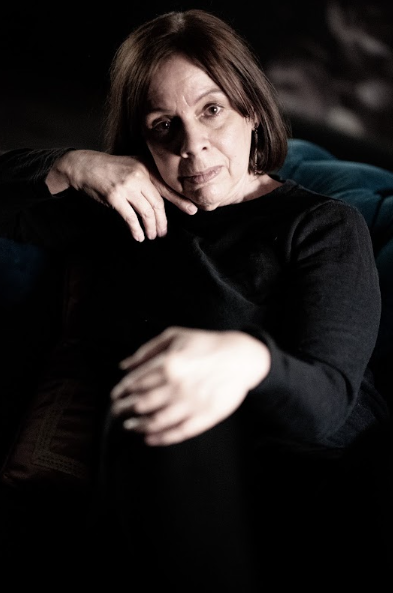
Elizabeth Perran’s February belongs to that rewarding category of debut albums that seem less like introductions than discoveries. Rather than presenting a polished version of a familiar singer-songwriter template, Perran arrives with a language of her own, one shaped by literary observation, adventurous composition and a profound sensitivity to atmosphere. The nine songs are united less by conventional narrative than by a shared emotional climate. Loneliness, ageing, memory and identity recur like figures glimpsed through windows, while the settings shift from city streets to underground trains and private rooms. There is beauty here, but it is rarely uncomplicated. Decay, absence and uncertainty remain close to the surface. The title captures the album’s temperament perfectly, suggesting a period of suspension in which endurance itself becomes a form of hope.
If the lyrical world of February is distinctive, its arrangements are equally so. Perran has an impressive ear for the expressive possibilities of texture. The warmth of analogue synthesizers gives the album an understated continuity, but around that foundation she places piano, acoustic and electric guitar, Mellotron, woodwinds, saxophone and carefully judged rhythmic details. The result is an unusual synthesis of folk intimacy and art music sophistication. What is most impressive is the absence of obvious genre posturing. Perran does not announce her experimental credentials through excess. Instead, she allows unusual harmonies, instrumental combinations and shifts in structure to emerge naturally from the songs. The arrangements often feel like psychological spaces, expanding or contracting according to the emotional condition of the narrator.
That quality is particularly evident in Perran’s portraits of other people. “Old Woman Against the Winter” is a superb example, its piano and Mellotron creating an atmosphere at once delicate and severe. The woman at its centre confronts the erosion of age and the loss of those around her, yet the song never reduces her to an emblem of sadness. There is anger, identity and defiance beneath the fragility. “Sell Me an Old Man” achieves something similar through remarkable economy, suggesting an entire human history through selected details rather than exposition. “Peregrine Man,” meanwhile, has the quality of a modern folk legend. Its restrained woodwind arrangement and unusual harmonic movement create an atmosphere almost outside of time, while Perran’s unadorned vocal allows the song’s enigmatic central figure to remain elusive. These are songs that trust the listener, which is one reason they linger.
The album’s darker passages demonstrate that Perran is equally comfortable with abstraction. “Reeds” is perhaps the record’s most revealing composition, bringing piano, electric guitar, keyboards and saxophone into an arrangement that seems deliberately resistant to equilibrium. “Summer” moves beyond conventional songcraft altogether, functioning as an atmospheric interlude or tone poem. Then “Dark, Dark, Dark” takes repetition and vocal layering into unsettling territory, evoking both ritual and psychological disintegration. Its images of vanished places and urban deterioration make memory feel almost physical. The relative immediacy of “On the East Side Again” offers a change of pace, but not a release from the album’s concerns. Perran’s voice remains the constant throughout, capable of firmness and intimacy in equal measure. She understands the dramatic value of leaving a phrase exposed, allowing silence and space to become part of the performance.
By the time “Pillars and Tile” arrives, February has established its own internal geography. Trains, machinery, shadows and the awakening city become part of an ending that feels deliberately unfinished. This is not an album interested in pretending that every wound produces a lesson or every journey arrives at a destination. Its achievement lies in finding form for uncertainty. Perran’s songs are intelligent without becoming cerebral, experimental without becoming mannered, and emotionally affecting without relying on sentimentality. Most importantly, February possesses a rare sense of artistic coherence. Elizabeth Perran has made a debut that feels both intimate and expansive, grounded in the traditions of songwriting while reaching towards something more elusive. It is a remarkably assured first statement from an artist whose musical world already feels unmistakably her own.