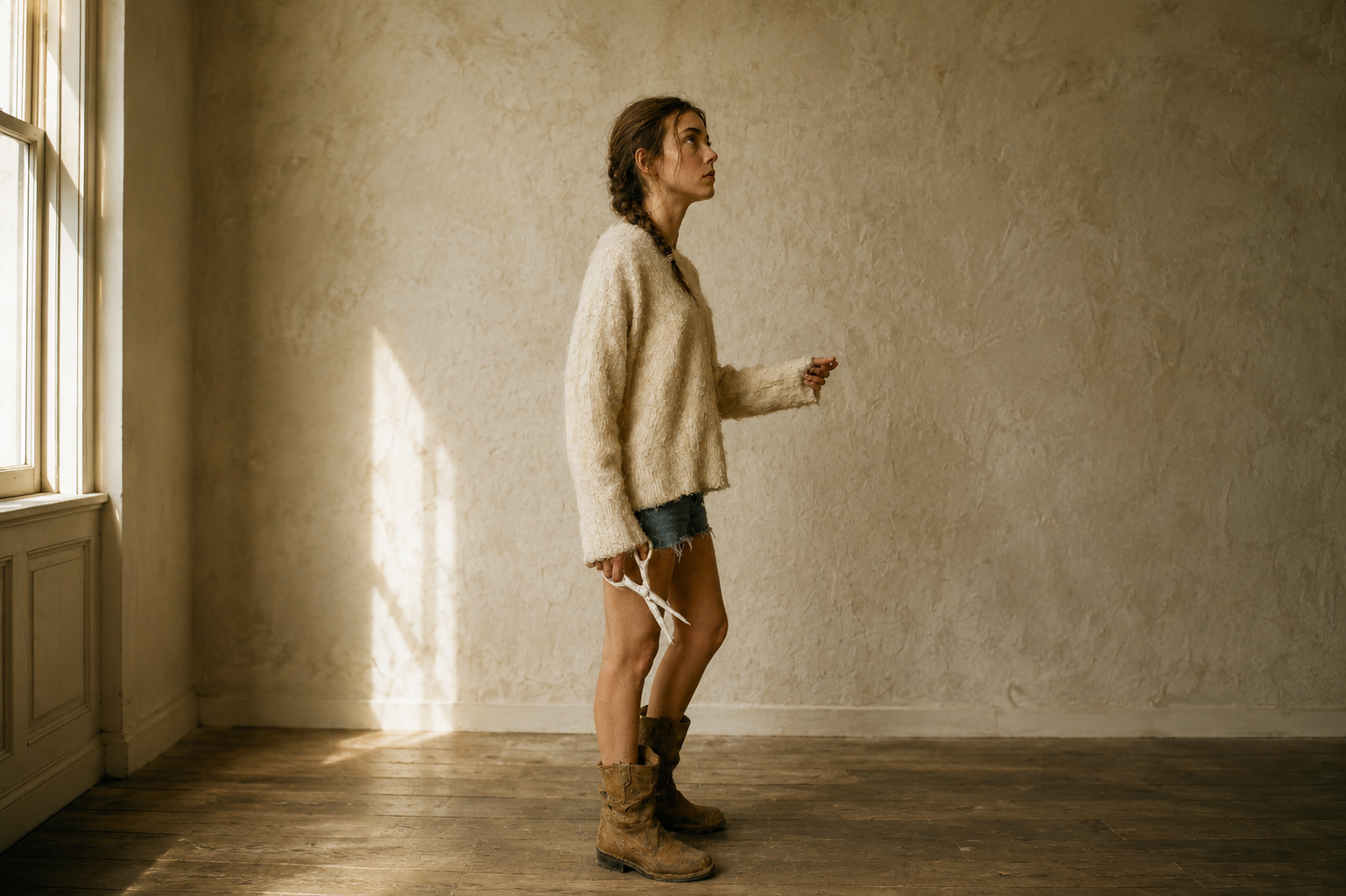
With the release of her new single, “The Art of Letting Go”, Dublin singer-songwriter Bella Shields continues to establish herself as one of the most thoughtful and compelling emerging voices of her generation. Building on the momentum of her debut release, “Claddagh Ring”, Bella’s latest track showcases a songwriter unafraid to explore the nuances of personal growth, changing relationships and self-discovery with honesty and insight.
In this interview, Bella discusses the inspiration behind “The Art of Letting Go”, her evolving approach to songwriting and the importance of staying true to herself as both an artist and an individual. From reflecting on the emotional realities of growing up to sharing how music helps her process and understand the world around her, Bella offers a fascinating look into the creative mindset behind a song that resonates far beyond its years.
LOCK: You’ve had a really exciting start with your debut single “Claddagh Ring” earlier this year – how did it feel releasing your first song into the world, and what do you feel you learned from that experience?
Bella: Releasing my first song definitely dealt out a good rollercoaster of feelings. Firstly, I felt quite liberated, releasing a song has been one of my aspirations for a while now, and finally achieving it definitely meant a lot of pressure was lost, and it was a lovely, freeing feeling. I learnt a lot from this experience, notably, I learnt that fearing failure is pointless. What held me back for so long was the fear of not being successful, my expectations were so high, but the minute I released ‘Claddagh Ring’ into the world, I realised that I simply didn’t care how well the song performed, I was just proud to have done it. And that’s a useful lesson to have learned that can carry into so many other aspects of life.
LOCK: Now with your new single, “The Art of Letting Go”, it feels like there’s a noticeable shift in tone and emotional depth. When did the idea for this song first start forming for you?
Bella: Well that emotional depth point definitely makes sense. “Claddagh Ring” was written when I was around 12/13, and was based on a fantasy in my head, not true experience, but I wrote “The Art of Letting Go” more recently, when I was fourteen, and I wrote it around real things I was experiencing as a teenager growing up. As an empathetic person, (and just about any person), when someone who is important to you changes, struggles, and faces adolescence and everything that comes with it, it really also takes a toll on you yourself. As I witnessed the struggles of those around me, and how it affected their growth, it drew up real, tangible emotions within me – emotions that I wasn’t really able to untangle until I wrote “The Art of Letting Go” – I sort of used this song as a means of understanding how I felt.
LOCK: You’ve described this track as exploring the quieter side of growing up – outgrowing people, shifting friendships, and change that doesn’t always have clear answers. What made you want to focus on those more subtle, often unspoken emotions?
Bella: Well, you definitely get a lot of songs on topics like heartbreak, love, revenge, etc. emotions that are relatable across the board, and people enjoy listening to because it evokes emotions within them, they feel they can relate to the artist. As a younger artist, without as many life experiences like these from which to draw inspiration, and having not been so affected yet by notions like these, I can probably enable myself to write songs expressing these more mainstream things, and people will relate – as they are global problems as I said. But, if I want to be able to engage and relate to my audience as well as them connecting with me, and really portray that emotional depth when performing, then I am better off writing about things that I specifically experience, in the hope that any listener can really understand and sympathise with me on a deeper level because of that mutual understanding, rather than a one-way relatability.
LOCK: There’s a really reflective quality in the lyrics, especially in how closely you observe someone else’s emotional changes. Do you tend to write from personal experience, observation, or a mix of both?
Bella: This song specifically really is just from observation, but, being quite a deep and reflective person myself, I find it easy to understand and empathise with what is going on in other people, especially if they are someone who is meaningful in my life, which is the case with “The Art of Letting Go”. However, I still do tend to write from a personal perspective in other songs. For example – a song that is in the pipeline to be released soon – is based on my own personal experience and the song is kind of a form of catharsis which helps me get over what I’m feeling.
LOCK: You’ve spoken about how “as a teenager, you face so many emotions that are very hard to grapple with; you don’t quite understand how you feel – you just feel.” Has songwriting always been your way of making sense of those emotions, or did that come with time?
Bella: I think that as I develop as a songwriter, this becomes more and more prevalent. Whenever I write a song – subconsciously – I feel that whatever problem that song was about is done. It’s over. It kind of feels like closure on the problem. Even if all the driving forces behind the problem still exist, the fact that a song has been written on it just helps me to forget about the problem, and overall accept it so that it no longer bothers me. If you ever hear one of my songs and think “Wow, maybe I should ask her if she’s ok, that sounds hard”, just know that the fact that the song exists means I no longer need to talk about it. I’ve gotten that closure I needed.
LOCK: A big theme in the song is identity – trying to grow or reinvent yourself while also trying not to lose who you are. How do you personally navigate that balance as a young artist?
Bella: Personally – I have always been extremely confident in who I am. It is common rhetoric that teenagers have low self-esteem – low confidence – and struggle with identity, but I am extremely lucky to not face a lot of those problems. Maybe one of the reasons behind this is music. I know exactly who I am, I am extremely introspective and always acknowledge and deal with any problems, as I’ve said, oftentimes through music. And I also have an incredible family and support system who only affirm those beliefs. That isn’t to say that I don’t change, grow and develop, as those are important parts of growing up, but I think that I do those things in a way that is still in keeping with the morals I hold close to my heart and in a way that is accepting of change instead of scrutinising of it.
LOCK: You also touch on emotional withdrawal and how vulnerability can fade as people get older. Was that something you were seeing around you, or something you were processing more internally through writing?
Bella: Again, that is more something that I observe around me – in people that matter to me, and therefore inherently affect me as well. I find that the way our society works, it makes it harder to not conform to fitting in the box, and sometimes fitting in the box means not being able to express your problems. And I think when people get older, they care more about how they are perceived – and that brings about a whole new limiting belief system where every time you want to do something, you question whether or not you will be judged. I think that is what causes this fading of people’s childhood naivety and vulnerability.
LOCK: The idea of “letting go” can mean so many different things – people, versions of ourselves, expectations. When you wrote this song, what did “letting go” mean most to you?
Bella: Letting go, to me, meant letting go of what people think of you. Letting go of the societal norms and finding yourself. Although it was a double entendre and also meant, for me, letting go of the old versions of those people that I miss, and accepting the person they’re growing to become. Dr Seuss famously said, and this is my favourite quote – “Be who you are and say what you feel, because those who mind don’t matter, and those who matter don’t mind.”
LOCK: Your songwriting feels very emotionally aware and mature for your age, especially in how you approach complicated feelings without oversimplifying them. Do you feel like you’re still discovering your own writing voice, or is it starting to feel more defined now?
Bella: I’m definitely always discovering more about my writing voice – but as I said – as an introspective person, I have always felt relatively mature for my age, and I have always felt assured in how I express myself. I once had an experience of collaborating with a musician who told me I didn’t write like the 12-year-old I was at the time, that I should change my language and the way I express myself so that I don’t sound pretentious (although those weren’t their exact words). This was supposed to make me change the way I wrote so that I would conform – but sadly for that person – the only thing it did was make me feel even more confident in my artistic voice, as that moment told me that I did have a unique vision of the world – and I should put that to use.
LOCK: Looking ahead, what kind of stories or emotions are you most interested in exploring next in your music?
Bella: It’s so hard to know really, as I can’t predict what I will need to overcome in the future. But I would really love to be able to explore not only more relatable teenage emotions – but also topics that I am passionate about if possible, things like human rights, justice, equality, forgiveness, and other things that I think the world needs to hear. My belief is that if you aren’t heartbroken about the current state of some parts of the world – you don’t care enough about it.
“The Art of Letting Go” is out now via Now Listen.