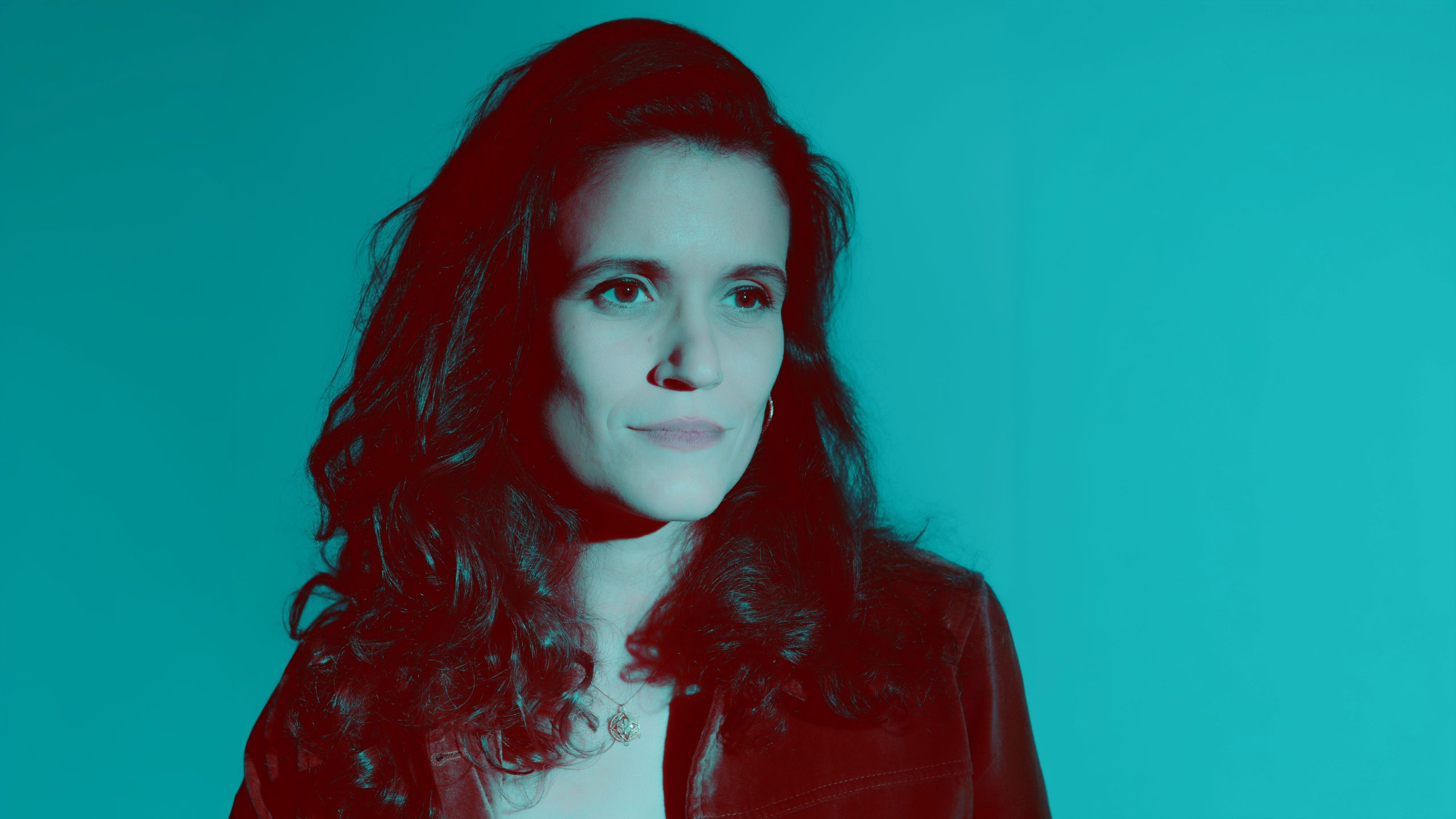
London-based Franco-Australian singer-songwriter Amélie Giardini introduces her artistic world with the release of debut single “Sombre Maze”, the first chapter from her forthcoming project, Colour Bound. Cinematic, immersive and emotionally nuanced, the track explores the experience of becoming trapped within familiar cycles of thought while searching for a way back to clarity and a renewed sense of self. Drawing from personal experiences and shaped by a life lived across Réunion Island, Australia and London, Amélie approaches difficult subjects with striking honesty, tenderness and imagination.
In this interview, Amélie reflects on the emotional journey behind “Sombre Maze”, the balance of darkness and hope that defines the song and the creative process that brought its rich sonic landscape to life. She also discusses the themes at the heart of Colour Bound—resilience, contradiction, beauty and the choice to seek colour even in life’s most challenging moments—as she offers a first glimpse into the project that will continue to unfold throughout 2026.
LOCK: To start with, for readers discovering you through this release, how would you introduce yourself as an artist, and how have your Franco-Australian roots and time based in London shaped your approach to songwriting?
Amélie: I actually grew up on Réunion Island, a small tropical island in the Indian Ocean, before finding myself in many very different corners of the world. Growing up in a French overseas territory shaped my outlook and my connection to nature, as have the years I’ve spent building a life connected to Australia and now living in London, surrounded by its incredible cultural scene. I’ve spent much of my adult life living and working abroad—often alone, sometimes in remote places, and immersed in the lives of local communities. Every place I’ve lived has left something with me.
Working in nature conservation and human rights has meant being confronted with both extraordinary beauty and some of humanity’s darkest realities. Music has become the place where I process those experiences and try to make sense of the nuances and contradictions that have stayed with me. Rather than turning away from difficult realities, I instinctively look for beauty, wonder and even fantasy within them. That’s reflected in my songwriting, which often has an epic or dreamlike quality while remaining rooted in very real human experiences.
I’ve never been interested in writing songs that offer simple answers. I’m much more drawn to the grey areas—the contradictions we all carry within us. I enjoy exploring difficult emotions through imagery that’s slightly surreal or poetic, and I have quite a dark sense of humour, so there’s often a hint of sarcasm woven into the way I tell those stories.
LOCK: Your debut single, “Sombre Maze”, marks the first glimpse into your upcoming Colour Bound project. What did it feel like to finally release this song as the opening chapter of something much larger?
Amélie: It was both exciting and strangely vulnerable. I’d lived with these words, melodies and feelings for a while, so releasing “Sombre Maze” felt a bit like opening a door I’d been standing behind for years.
Because it’s the first chapter of Colour Bound, it also carries the responsibility of introducing the emotional world of the project. I never wanted it to feel like a single isolated statement, but rather an invitation into a broader collection of songs that each explore different themes and emotional landscapes. Finally sharing that felt incredibly rewarding and exciting.
LOCK: The track explores the idea of being trapped within your own mind in a very vivid way. When did the concept behind “Sombre Maze” first begin to take shape for you emotionally or creatively?
Amélie: The idea emerged gradually rather than arriving all at once. It came from recognising a pattern of feeling stuck inside my own head while, from the outside, life often looked completely normal.
I became interested in the idea that our minds can create incredibly convincing realities that aren’t always shared by the people around us. The “maze” became a metaphor for that experience: searching for a way forward while constantly circling our familiar, dark thoughts. Once that image appeared, it became the thread that connected everything else in the song.
LOCK: You describe the song as coming from a period of moving through a long and difficult internal phase. How did that perspective shape the way you approached writing the lyrics?
Amélie: I didn’t want to write a diary entry or explain everything directly. I wanted the lyrics to feel honest without becoming overly literal.
During that period, emotions often felt contradictory, so I tried to let the lyrics reflect that rather than resolve it. There were moments of fear alongside moments of tenderness, frustration alongside quiet acceptance. I hoped that by leaving space in the writing, listeners might recognise something of their own experiences rather than simply hearing mine.
LOCK: There’s a real duality in the song between heaviness and hope. Was that contrast something you intentionally set out to capture, or did it reveal itself naturally as the writing process unfolded?
Amélie: I think it emerged quite naturally, because “Sombre Maze” was never meant to be a song written from inside the struggle. It was written as a farewell to it.
For many years, I lived with a kind of mental weight that quietly shaped the way I experienced the world. By the time I wrote “Sombre Maze”, I finally felt I had stepped out of that place. Looking back, I wasn’t filled with bitterness so much as a strange tenderness towards the person I had been. There was grief for those lost years, but also relief, gratitude and even moments of dark amusement when I thought about the strange places our minds can take us.
In many ways, “Sombre Maze” became a way of closing that chapter. It felt like saying goodbye before stepping into a very different part of my life. Reaching that place also gave me the emotional space to finally pursue music with the commitment it deserved. So it feels fitting that this is the first song people hear.
LOCK: You previously mentioned a sense of “tenderness” and even “dark amusement” when looking back on that period. How did you translate that emotional complexity into the tone and language of the lyrics without simplifying it?
Amélie: Time changes the way you look at difficult experiences. With distance, I found myself feeling compassion for the person I was, but also occasionally smiling at the strange logic our minds can create when we’re struggling.
I wanted those two perspectives to coexist in the lyrics. Rather than explaining everything directly or judging that earlier version of myself, I tried to write in a way that left room for both empathy and irony. That’s probably why the lyrics lean towards metaphor and imagery rather than literal storytelling. It felt like the only honest way to capture something that wasn’t purely tragic or purely hopeful, but quietly both at once.
LOCK: Sonically, “Sombre Maze” feels very cinematic and immersive, balancing softness with intensity. What kind of sonic world were you trying to build, and what guided those production choices?
Amélie: I wanted the music to feel like stepping inside the emotional landscape of the song rather than simply accompanying it. One of the ideas we kept coming back to was that feeling of circling around your own thoughts—never quite finding the way out. We tried to reflect that musically through the way the song builds and recedes, creating the sense of moving through the same emotional space before gradually breaking free.
We spent a lot of time thinking about atmosphere and dynamics. The quieter moments were meant to create a sense of intimacy, while the larger sections feel like emotional waves breaking through. That made the bridge particularly important, because it’s the first moment where the perspective genuinely opens outwards. As the song reaches towards other people carrying similar struggles, we also wanted the music to feel like it was letting in light and air.
Throughout the process, we were careful not to overcrowd the arrangement. Giving the instruments and vocals room to breathe felt just as important as adding new layers, because silence and space can carry emotion just as powerfully as sound.
LOCK: How did the recording and production process shape the final version of the track? Were there any moments in the studio where the song really shifted or came into focus?
Amélie: The production became an exercise in restraint. It was tempting at times to keep adding more, but some of the biggest breakthroughs came when we stripped things back instead.
One section that took my producer and me quite a while to get right was, “Cause I’ll grab your mind out of its sticky glaze, I won’t stop because I know the ways we lie.” I wanted it to interrupt the flow of the song with a stronger, more dominant feel. To me, it’s almost like someone forcefully stepping into another person’s spiral of dark thoughts, grabbing hold of them and refusing to let them disappear any deeper into their maze. Once that short interruption had happened, I wanted things to soften again for the next line, “And I will fly with you over your sombre maze”, when it became more about carrying someone with empathy and reminding them they’re not alone.
LOCK: The bridge feels like it opens the perspective outward, touching on solidarity and the idea of others going through similar experiences. How important was that sense of connection when you were finishing the song?
Amélie: That was incredibly important to me. Although “Sombre Maze” comes from a personal place, I never wanted it to remain solely about my own experience.
The bridge was my way of stepping outside myself and reaching out to the many people that carry invisible struggles we know nothing about. If the song offers anything, I hope it’s the reminder that feeling lost or overwhelmed is often much more universal than we imagine. There’s real comfort in recognising that we aren’t navigating those moments alone.
LOCK: As “Sombre Maze” introduces the wider Colour Bound project, what can listeners expect from the journey ahead in 2026, and what do you hope they take away from this first chapter?
Amélie: The title Colour Bound reflects something I’ve consciously trained myself to do over the years. Through both my work and my own experiences, I’ve often found myself confronted with darkness, but I’ve learnt to deliberately seek out colour, beauty and wonder instead of letting that darkness define the way I see the world.
In that sense, Colour Bound has a double meaning. It’s about my deep connection to beauty, but it’s also about choosing to bind myself to it as a way of facing life’s darker realities without being consumed by them. I think that choice has gradually become a source of resilience for me, and resilience is a thread that runs through the whole project.
Across the project, I explore power dynamics, the contradictions and, sometimes, the absurdities of being human. What connects the songs is a fascination with nuance, and with the places where beauty and ugliness, guilt and victimhood, hope and uncertainty can coexist.
My hope is that listeners don’t feel they’re being told what to think or feel. Instead, I’d love these songs to create space for reflection and for people to recognise parts of themselves within them. If “Sombre Maze” encourages someone to feel a little less alone, or simply invites them to sit with an emotion they hadn’t quite found words for before, then it has already achieved more than I could have hoped.
“Sombre Maze” is out now via Now Listen.