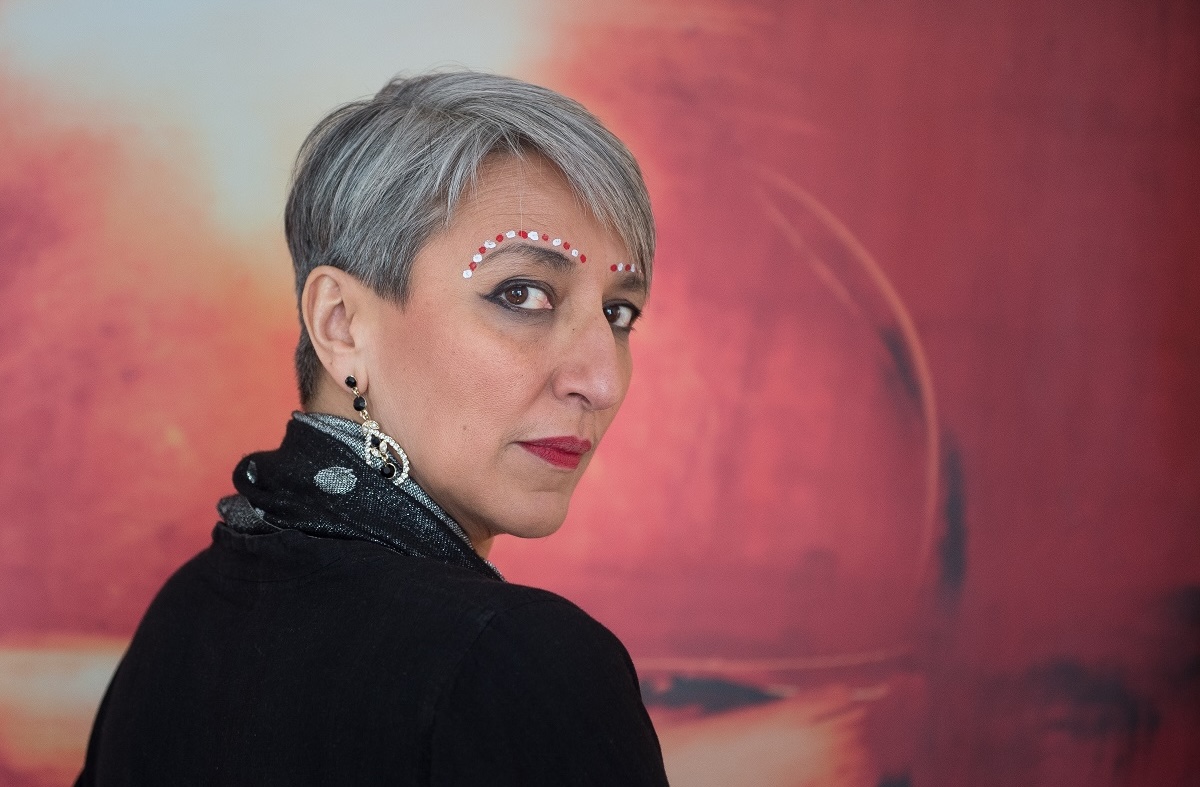
Nearly three decades after its original release, ‘The Colour of the Heart’ still feels strikingly immediate. The remastered album from bilingual singer-songwriter and multidisciplinary artist Samia Malik is the opening chapter of ‘Azaadi | آزادی | A Journey To Freedom’, a four-album project tracing a life lived between Urdu and English, Pakistan and Britain, silence and self-expression. First released in 1998 and newly remastered in London by Camilo Tirado, the record now arrives with the benefit of hindsight without losing the urgency that shaped it.
Born into a Pakistani Muslim family and raised in Bradford after migrating to Britain as a child, she grew up amid racism, cultural conflict and the pressures of living between two identities. Poetry and music became a means of survival as much as expression, and that sense of necessity remains central to the album.
‘Ma Ki Zabaan’ is especially powerful in that respect. Written in the ghazal form, the song explores language as both inheritance and distance, reflecting her experience of almost losing Urdu before reclaiming it as a route back towards family and cultural memory. It’s deeply personal, but the questions it raises around belonging and identity extend far beyond one individual story.
While ‘Hum Gunagaar Aurtae’ pushes more directly into defiance. Based on Kishwar Naheed’s poem, the song reclaims the language used to shame and silence women, transforming it into an anthem of resistance. Given her own experience of leaving an abusive marriage at a young age and facing periods of familial ostracism, the performance carries a weight that feels truly lived rather than merely theoretical.
Elsewhere, ‘Kooch Loag’ examines conditional love and the pressure placed on women to make themselves smaller in order to be accepted, while settings of poetry by Ishrat Aafreen, Sara Shagufta and Naheed broaden the album into a wider conversation about migration, oppression, strength and survival.
But what makes ‘The Colour of the Heart’ particularly compelling is the way she uses traditional forms without treating them as fixed objects. The ghazal becomes something elastic and contemporary, capable of carrying feminist thought, personal history and cross-cultural identity without losing its poetic elegance.
In all, ‘The Colour of the Heart’ is about finding a voice after being told to lower it. And nearly thirty years later, Samia Malik sounds no less determined to use it.