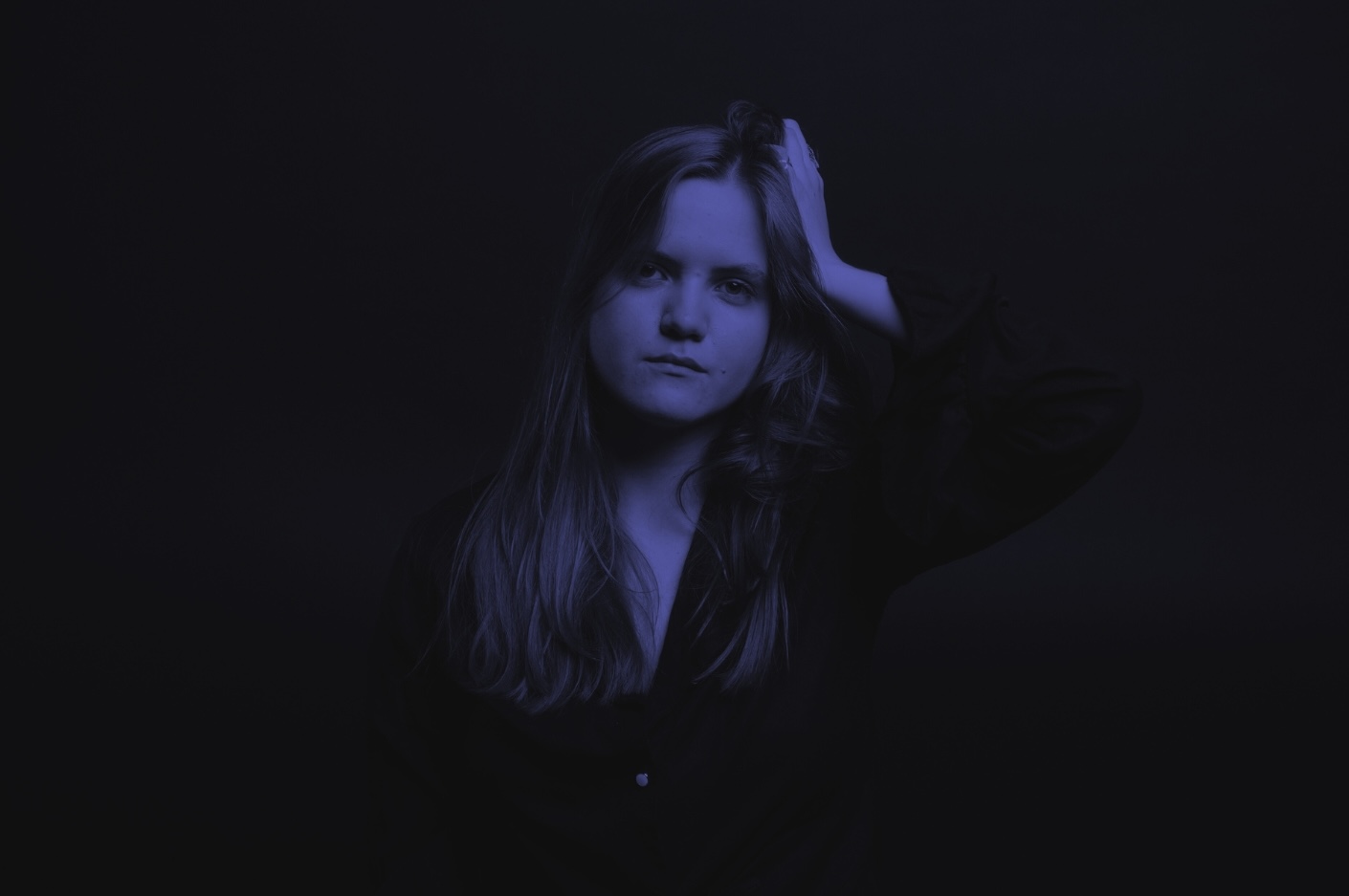
Ukrainian-born artist Soffel returns with her ambitious new album ‘Even Oceans Fall Apart’, a bold, conceptual release that builds on the foundations of her 2025 debut ‘MOONLIGHT WHISPERS’. Blurring the lines between synth-wave and indie pop, the record introduces a darker, more expansive world, defined by emotional intensity and cinematic scope.
Across its fifteen tracks, ‘Even Oceans Fall Apart’ explores themes of personal and relational collapse, capturing the fragile moment where identity begins to unravel. Combining lush orchestral elements with modern electronic production, Soffel creates a textured, immersive soundscape that mirrors the tension between outward composure and inner disintegration.
We caught up with Soffel to discuss the vision behind the record, the emotional themes driving the project, and how she continues to evolve her sound as an independent artist.
–
Can you tell us a bit about your musical background and how you got started in music?
Music has been with me for as long as I can remember. My grandfather had a piano, and every time I visited, I would try to play something, even before I started school. Later, I got my own keyboard and started learning on my own at home.
Around the age of 11 or 12, I got my first guitar. My mom borrowed one from friends so I could practice, and I studied with a teacher until high school. At 13, I wrote my first instrumental pieces, Fate and Cruel World. I even arranged them and uploaded them to YouTube at that time. Back then, I was afraid to sing. Someone once told me my voice wasn’t “good enough”, and I believed it for years. So I stayed behind the music, writing poetry and instrumentals, but not really showing myself.
Everything changed at university when I started taking vocal lessons. I let go of that fear and stopped hiding. I went back to my old lyrics, started experimenting with sounds and lyrics, and that’s when music became something real for me, not just something I created, but something I lived through.
Who are some of your biggest musical influences, both past and present?
Music was always around me growing up, and a lot of that came from my parents. My dad was really into metal. I remember we used to listen to an Amon Amarth CD in the car all the time. When I got a bit older, he started taking me to concerts, and I’m really grateful for that. Those moments shaped how I feel music, not just as sound, but as something physical and emotional. My mom had a completely different taste, more classic or lighter music. She loved Madonna, so of course I listened too, and I actually loved it. Britney Spears also felt like a classic at some point. We also listened to a lot of Ukrainian songs with my grandfather, and some classical music. I think I grew up in this mix of very different worlds, and I absorbed all of it.
Now I’m mostly inspired by artists who genuinely enjoy what they do. You can feel when it’s real, and that kind of energy stays with me.
Are there any specific artists or bands that have had a significant impact on your music style or approach?
I’ve always been fascinated by Radiohead. There’s something about their sound that feels both emotional and complex at the same time, and that really shaped how I think about music. I also grew up listening to a lot of metal because of my dad. Bands like Arch Enemy and Machine Head influenced how I understand intensity and emotional weight in music. Closer to my current sound, I’d say Daft Punk had an impact, especially in terms of texture and production. But overall, I don’t follow one direction. My sound changes depending on what I need to say. The emotion always comes first.
Could you share any memorable moments or experiences that have shaped your musical journey so far?
The most meaningful moments for me are when people truly connect with my music. I remember someone telling me that he plays my first song as Soffel while driving at night, just listening and singing along because he “feels it”. That stayed with me, that’s the moment when music stops being just something you create and becomes something that lives in someone else’s life.
How do you express your personal experiences and identity through your music?
I try to translate emotions into sound and thoughts into lyrics. It’s not always perfect, and sometimes it doesn’t come out exactly the way I imagined, but that’s part of the process. For me, it’s about being honest in that moment and not trying to make it “right”, just making it real.
Have you faced any challenges or obstacles as a female musician, and if so, how have you overcome them?
I think one of the biggest challenges is being taken seriously and trusting your own voice. For me, it’s been about learning to rely on my own vision and not constantly question whether I’m “doing it right”. The more I create, the more I trust myself.
Are there any particular themes or messages that you aim to convey through your music?
A big theme in my music is feeling unseen or disconnected but also learning how to stay with yourself through that. I want to show that no matter how hard things feel, you’re not alone. It’s okay to feel lost. It’s okay to not be okay. At the same time, there’s always a quiet message of not giving up. Even when everything feels uncertain, you keep going. I also want to talk more openly about emotional exhaustion, anxiety, and mental health. I want my music to feel like a place, where people can go when they need to feel understood.
Can you talk about your creative process and how you go about writing and producing your music?
It usually starts with a feeling or a small idea. I write down any thoughts or melodic fragments that come to me. Then I sit at the piano and try to turn that feeling into a melody. I often go back to the exact emotion I had when the idea first appeared. After that, I move into sound design. I experiment with synths and textures until something feels right. The process is very intuitive. I don’t like forcing it. If something doesn’t feel honest, I step away and come back later.
How do you hope your music will resonate with your audience, especially with other aspiring female musicians?
I hope people recognize themselves when they listen to my music, both through the sound and the lyrics. I want it to feel like a safe space, and ideally to build a community around it, people who go through similar things and feel less alone because of it. For other female artists, I think it’s important to see that you don’t have to fit into a certain mold. You can build your own sound, your own world, and trust that it will find the right people.
–
Listen to Soffel’s new album ‘Even Oceans Fall Apart’ below.