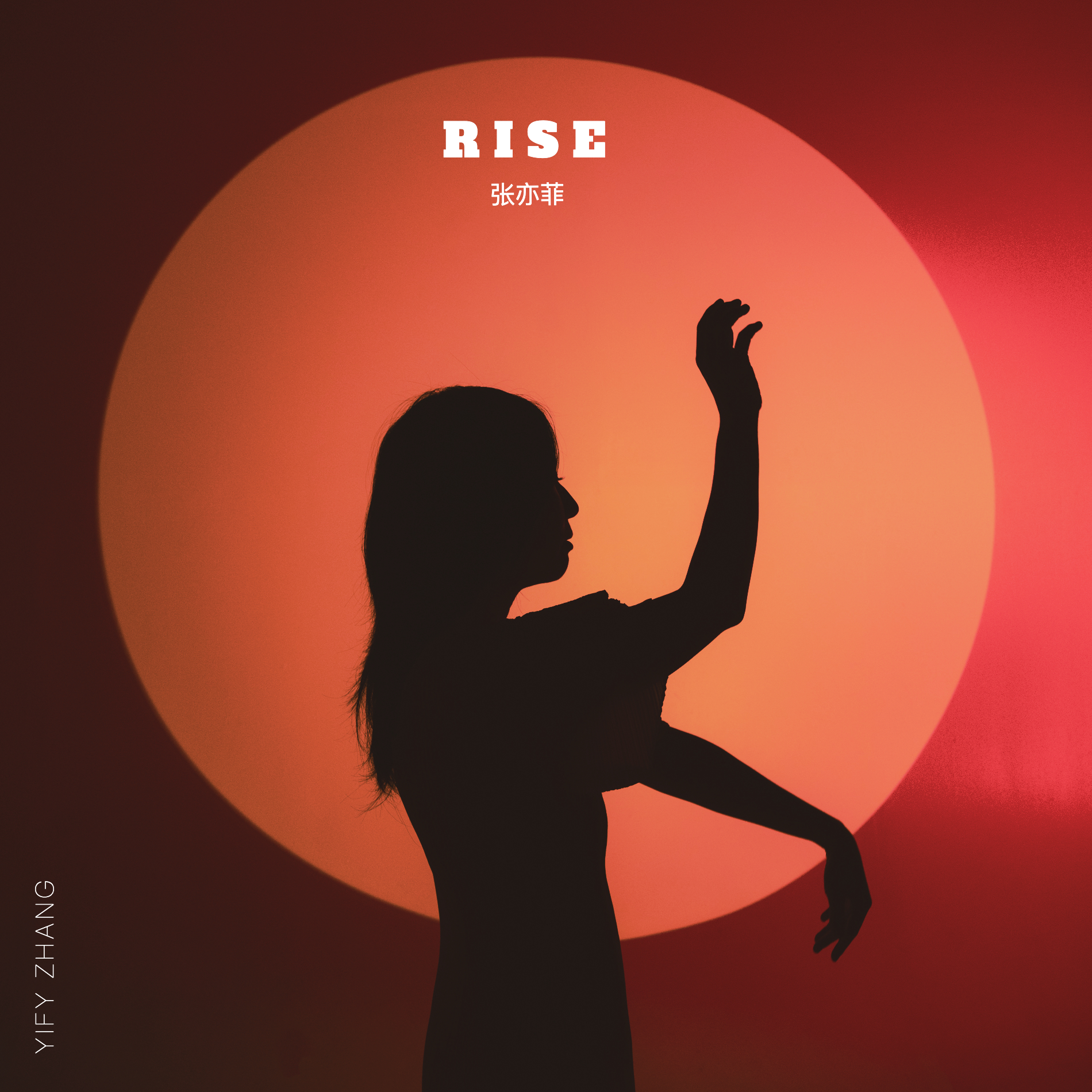
With “Rise”, YIFY enters a new chapter defined by freedom, self-possession, and the quiet power of becoming fully oneself. The independent singer-songwriter’s latest release is a bilingual anthem in English and Mandarin, weaving soaring melodies and cinematic production into a deeply personal reflection on the expectations women inherit, carry, and ultimately have the courage to leave behind.
Rooted in YIFY’s experiences growing up in China, “Rise” explores the subtle rules surrounding femininity: how to look, how to speak, how much space to occupy, and when ambition becomes “too much.” Yet the song is not rooted in defiance alone. It is a celebration of possibility and a reminder that authenticity can be its own form of liberation.
As YIFY continues to move fluidly between English and Mandarin, she is also carving out a creative language entirely her own, one that resists easy categorization and prioritizes artistic evolution over convention. In conversation with LOCK Magazine, YIFY opens up about the expectations she has had to unlearn, the freedom of creating in her mother tongue, and why choosing to be fully seen may be the most radical act of all.
“Rise” is a powerful statement about women breaking free from expectations. What personal experiences or observations first inspired you to write the song?
The song is an anthem for anyone feeling constricted to being a smaller version of who they are. For myself personally, there were well intentioned advice I received early in my childhood about what was considered beautiful and virtuous vs. not for being a woman in this world that I’ve carried with me into adulthood. I was inspired by the melody which came to me first, and felt drawn to making a rebellion anthem for anyone with similar experiences.
You’ve been releasing more music in Mandarin this year. What made you want to shift toward singing in Mandarin rather than English at this stage of your musical journey?
Singing in my mother tongue unlocked a naturallness in my writing and singing that has really expanded me as an artist. What began as songwriting experiments about two years ago have turned into a series of singles, and a larger ambition to incorporate both languages in my music. They’re both very much who I am and color the lenses through which I process the world around me.
There are so many messages women receive about being “too loud”, “too ambitious”, or taking up too much space. Was there a particular expectation you had to unlearn in your own life?
I grew up in China and for as long as I can remember, was told that certain things were okay for me to do, while others were considered too much. From the way I’d dress, to the way to carry and express myself, to which features on my body were considered beautiful vs. not, I found myself having to unlearn a lot of these well intentioned frameworks.
As an independent artist, how do you navigate the pressure to fit into industry expectations while staying true to your own identity and creative vision?
The pressure is very real — be it staying within a specific lane instead of changing in order to build up one’s fanbase to creating large volumes of content that appeal to click bait type algorithms of social media platforms. I’ve definitely struggled with these just as most artists do, but eventually came to realize that my first priority is and will always remain keeping the joy in creating. And with each project, what that has asked of me has been to evolve myself as an artist in ways that the industry may consider not smart as it makes marketing and promotions more difficult. But staying true to my own voice is important, and that is what I’ve prioritized.
LOCK champions women in music. Which women artists, past or present, have made you feel that you could take up space and create music on your own terms?
I’m deeply inspired by artists within music and outside of it who challenge the norm while expressing emotions that are widely relatable. Music artists like Aurora, Milck, and Hana Rani, to visual artists like Frida Kahlo to Lenora Carrington have all influenced my work.
If you could give one piece of advice to a young woman who feels she has to make herself smaller to be accepted, what would you tell her?
I would ask her a question instead, and that is: would you rather be adored while wearing a mask, or be fully seen, and, maybe needing to go on a longer journey in order to be surrounded by people who are able to cherish the real you, who you actually are.