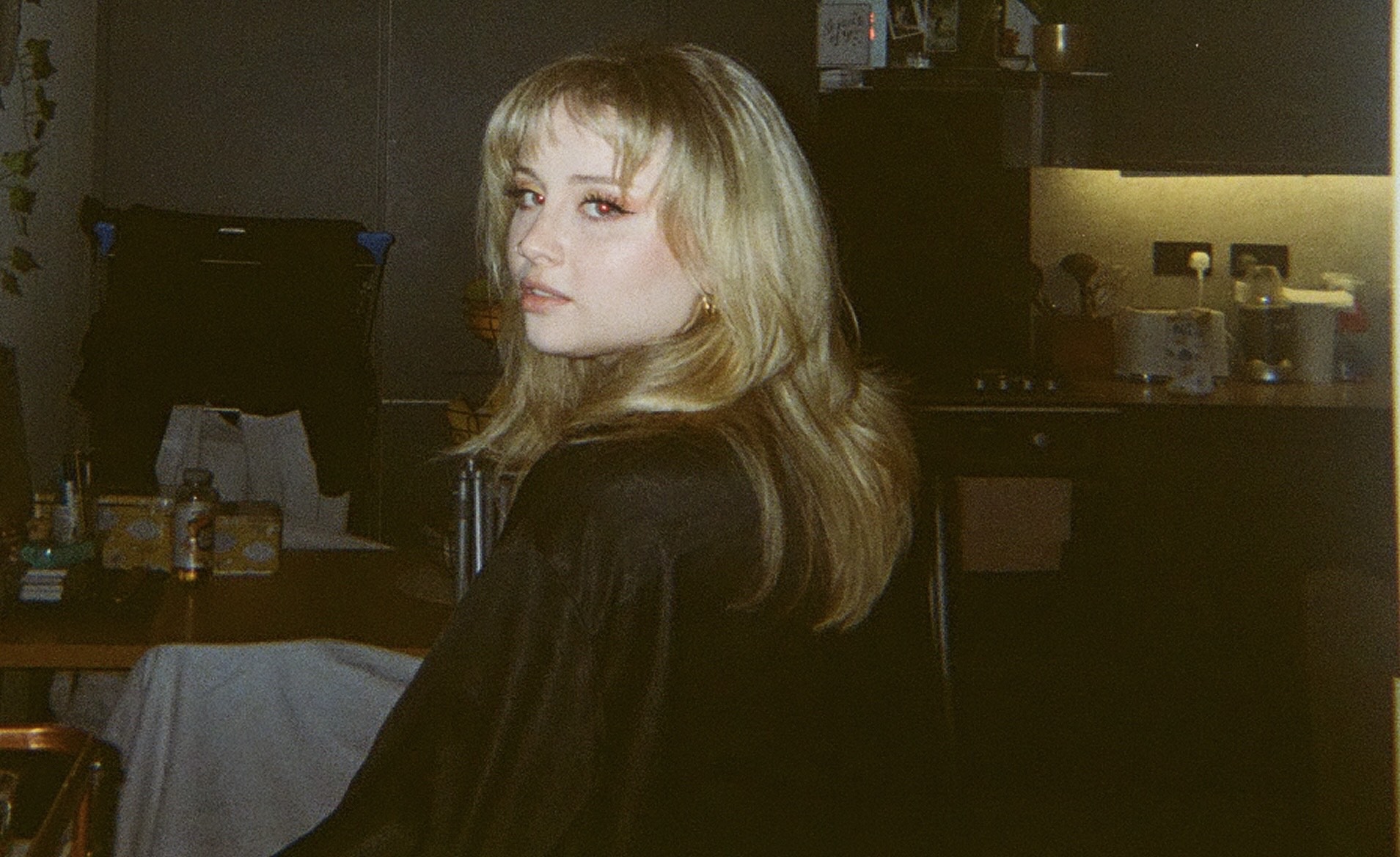
Following a dazzling run of releases these last few years, London’s Seymour returns once again with her riveting new single ‘Voicenote Monologue’.
Honing more of that rich and mesmerising aesthetic she has built for herself since she first arrived, ‘Voicenote Monologue’ makes for a beautifully warm and immersive listen throughout. So we caught up with her to discover more about her background and what has been inspiring her recently.
–
Can you tell us a bit about your musical background and how you got started in music?
I’ve been singing and performing since I was very young, maybe aged 4. I just loved entertaining people and making them laugh and smile. When I got to about 13/14 I started having guitar lessons and also writing songs to make sense of some of the darker things I was experiencing in life. I used a lot of abstract lyrics, I was afraid people around me would know what I was talking about in my songs and I felt more comfortable hiding the meanings through metaphors. When I got to 18 I moved to London and started performing live and writing more songs which is when I started to love gigging. I also enjoyed going out and watching bands too. During Covid I spent a lot of time developing my songs and arranging them.
Who are some of your biggest musical influences, both past and present?
When I was a teenager I loved a lot of punk rock music and classic rock but I also loved Amy Winehouse and I loved jazz music. My songs have been written mainly influenced by bands like the smiths and arctic monkeys but I feel my lyrics are really inspired by bands like Nirvana and Pierce the Veil but also Amy Winehouse.
Are there any specific artists or bands that have had a significant impact on your music style or approach?
Definitely Amy Winehouse, Pink Floyd as well, also bands like Alt -J for lyrics. In terms of my approach I feel it’s very similar to Amy Winehouse, I always start with lyrics, I’m constantly writing lyrics in a notepad or my phone and then I create a song around the lyrics.
Could you share any memorable moments or experiences that have shaped your musical journey so far?
I would say my most memorable moment was in 2021. It was when Covid restrictions were easing. People were allowed to see gigs but had to be in seats. I had a gig at The Amersham Arms and it was our first gig since we’d come out of lockdown. It was just the most amazing night, so many people I love came to see me and I just felt this overwhelming support from everyone. When the gig was over we all walked to the top of a hill, where we found a park and we sat and had some beers and we could see a view of central and all the lights. It felt like I was in a movie, just surrounded by all of my friends looking down on this amazing view. After that night I just knew that music was what I was meant to do and since then I’ve kept working on my music and performing.
How do you express your personal experiences and identity through your music?
I feel the lyrics I use are very abstract and sometimes quite funny, but they are always very personal to me. It’s really important to me that people who have had similar experiences in life to me, feel heard through my music. But I also don’t want my songs to be too triggering so I usually use a lot of metaphors. I also think it’s really important for some songs to be more upbeat than others. ‘Voicenote Monologue’ was written about a friendship break up and it was really important to me that the song was very cathartic and loud in the choruses but the verses were quieter to emphasise the lyrics more.
Have you faced any challenges or obstacles as a female musician, and if so, how have you overcome them?
There have definitely been a few challenges. There’s been a lot of industry professionals who’s have been quite patronising and mocked my music taste but have treated other male artists or all male bands very differently. I’ve also had to be careful when working with some male musicians for similar reasons. There has also been instances where male musicians/ industry professionals have used the fact that I am a young woman as an excuse to be inappropriate. I’ve learned a lot from these experiences and luckily now I have a team of people I work with who are very progressive and don’t treat female artists differently. But I do think it’s really important people recognise how difficult it can be to be a female musician. These experiences are so common, and it’s really a shame that female musicians have to be so careful with who they work with.
Are there any particular themes or messages that you aim to convey through your music?
I’ve spoken about themes such as inappropriate relationships, alcohol abuse and mental health through my songs and I think my main aim in this is to encourage other people to speak up about their experiences. In my life when I’ve tried to repress negative experiences it’s really badly affected my mental health and I feel quite passionately about sharing this so other people don’t do the same.
Can you talk about your creative process and how you go about writing and producing your music?
I usually write songs around my lyrics. I tend to be writing lyrics a lot of the time and when I feel like making a song I use piano or keys to write an instrumental around it. I love performing live and usually this is how I test how much people will enjoy a song. After it’s written I take it to my band and we create a live arrangement and then usually I take it to a producer and we create a recorded version based off how we’ve been playing a song live. We played Voicenote monologue live quite a lot before I decided I wanted to record and release it. I worked with Patch Chiverton on the recorded version and I feel his production skills really bought this song to life.
How do you hope your music will resonate with your audience, especially with other aspiring female musicians?
I really hope songs like Voicenote Monologue make people feel powerful when they’re listening to it. Friendship breakups are really common and I hope this song encourages people to take their power back and move on from toxic situations whilst allowing themselves to feel all the sadness that comes with it. I really hope aspiring female musicians hear my music and feel encouraged to write about their experiences, I feel this is really what the music industry needs. Now we’re talking more about feminist issues I think it would be so great if female artists and musicians used this as an opportunity to share there experiences through music and I really hope my music inspires them to do this.
–
Listen to Seymour’s new single ‘Voicenote Monologue’ below.