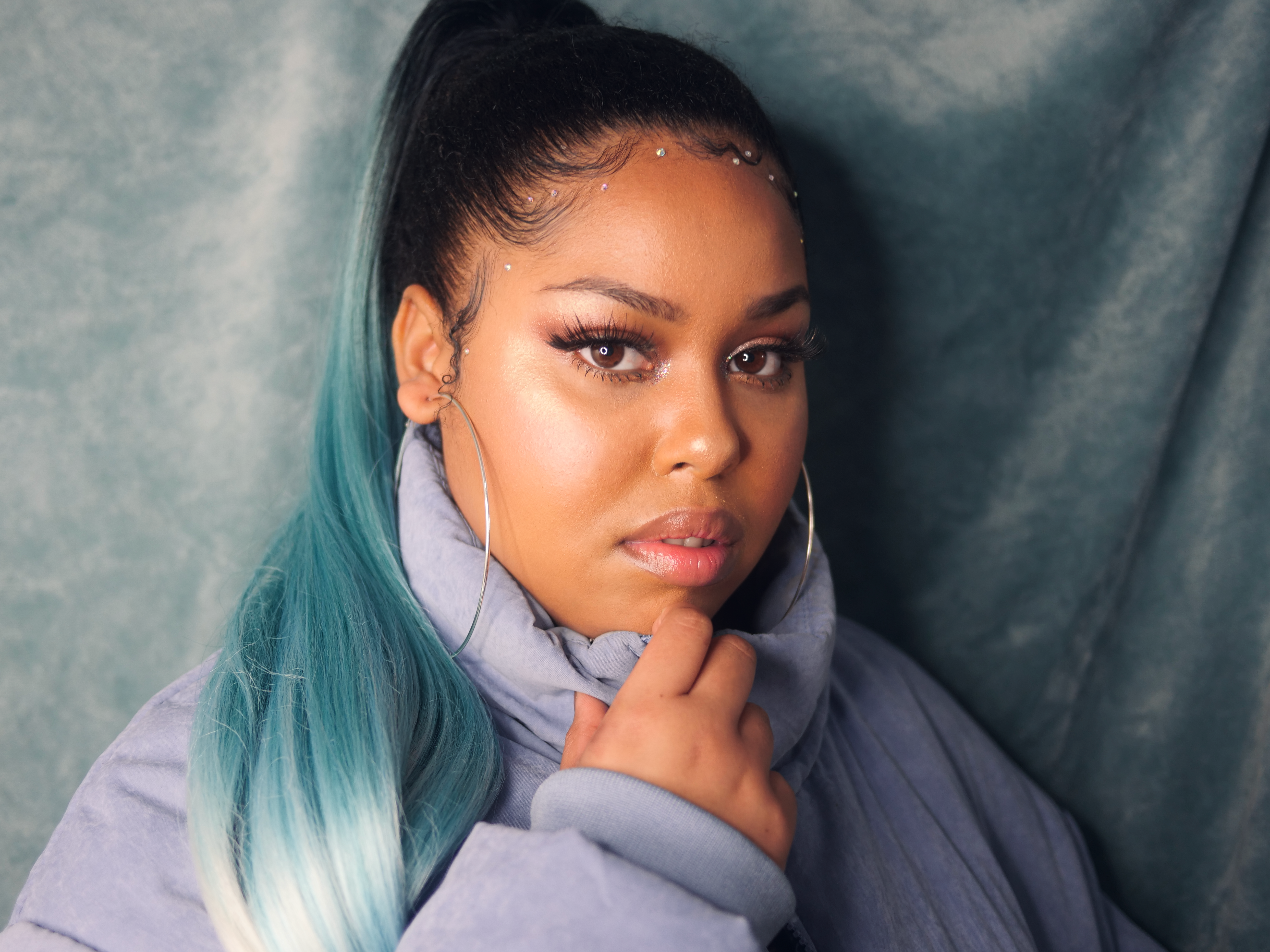
Shelana Azora’s music has always been rooted in self-discovery but her latest chapter is defined by something even more powerful: self-trust. The East London artist blends soulful vocals, sharp lyricism and expressive rap to tell stories of heartbreak, healing and personal growth, using vulnerability as a source of strength rather than something to hide.
Following the release of “Can’t Trust”, a single in collaboration with Richandell, we spoke with Shelana about finding her voice across singing and rap, embracing a new boundary-led era, the influence of East London on her artistry, and why success now means creating a life and career entirely on her own terms.
- “Can’t Trust” is about reaching the point where self-respect outweighs the need for answers. Has there been a particular moment in your life that changed the way you set boundaries, both personally and creatively?
Funnily enough, my debut EP ‘Epiphany’ (2019), explored my ‘moment of realisation’ and healing after a toxic relationship. Years later, setting boundaries and staying true to my worth is something I’ve continued to learn and practice. I’ve learned that growth truly comes when you choose yourself, rather than waiting for someone else to treat you like you deserve – you should always choose you. I set boundaries in my life by asking myself what really makes me happy, and understanding when something or someone is no longer serving me. I’ve had to overcome heartbreak over the last year that really challenged me. Self-respect really does outweigh the need for answers and ‘closure’ – and “Can’t Trust” is a song that really reminds me of my power to choose myself in those times of doubt.
- You move naturally between singing and rap, two very different forms of expression. What does each allow you to say that the other can’t?
I started rapping and writing bars when I was 8-years-old after listening to Eminem and 50 Cent on the radio. I’ve always been inspired by rap and how it can tell stories in a raw, authentic way. Sometimes I use Spoken Word poetry in my live shows to really capture the essence of the story I’m telling. Singing is delicate, vulnerable and emotional, while rapping for me is pure poetry.
- You’ve spoken about entering a more boundary-led chapter as an artist. How has that shift changed not only your music, but also the way you approach opportunities and collaborations?
As an independent artist, it’s so important to stay grounded in everything I do. Opportunities will come, but I believe that it’s so important to work on projects and with people that align with my values. I also want to work with artists and producers that have great energy, because I know that it will create even better music! Energy never lies.
- As a woman in music, have you ever felt pressure to make yourself smaller or more agreeable? How have you learned to trust your own instincts instead?
Oh definitely. Being a woman in the music industry, especially a WoC, comes with its fair share of challenges for sure! There is so much pressure to look a certain way, have a particular body type, and listen to the opinions of a male-dominated industry. As an independent artist, trusting your own instincts is 100% necessary – I’ve learned to follow my heart when making decisions and truly trust my gut. I no longer care to be agreeable; this new chapter is about letting my voice be heard and encouraging other women to do the same.
- East London has such a rich musical heritage. In what ways has growing up there influenced your confidence, your storytelling, and the artist you’ve become today?
East London feels like the artsy corner of London and I love it! Growing up in East meant that art was always in the air. Just take a trip to Dalston or Shoreditch, and you’ll be surrounded by rich street art, cinema, fashion and music. Growing up, I was really inspired by Jessie J who grew up near my local area, as well as Leona Lewis who grew up in Hackney. Seeing these talented female artists so close to home made me believe that it’s possible for an East London girl like me to make it. In my song “No Luv” I reference being “just a girl from the East side” because I’ll be repping East London forever!
- “Can’t Trust” transforms heartbreak into strength rather than revenge. Was it important for you that the song focused on empowerment instead of resentment?
In “Can’t Trust”, one of the lines that really speaks to me is actually in the outro where I sing “if you won’t then I’ll walk away”. The power of being able to walk away when something isn’t right for you anymore and you’re no longer getting the love you deserve, is more powerful than revenge. Now l’m practicing what I preach. “Can’t Trust” really is my reminder that I am worthy of healthy love and I won’t settle for anything less, and I hope it helps someone else feel that ‘bad b’ energy when they listen to the song.
- Many women are taught to put other people’s comfort before their own. Do you think learning to say “no” has been an important part of your personal and artistic journey?
Learning to say “no” is deeper than just music. It’s nurturing my inner child who once didn’t have boundaries in relationships, work and friendships. I really believe that as a former people-pleaser, I’ve had to practice saying “no” even when it felt uncomfortable. I hope my music does inspire others to stay true to themself and use their voice.
- LOCK celebrates women who are creating on their own terms. What does success look like to you now, and has that definition changed as you’ve grown as an artist?
Being a creative entrepreneur in my 30s is really the flex my 21-year-old self would be proud of. Success to me is freedom: freedom to live anywhere, do work I love everyday, and create endlessly. After working and living in Thailand for 2 years, I realised that success is beyond being just an artist – it’s being a mentor, a friend, a healer. That’s why I started EPIPHANY – a creative coaching agency that focuses on artist development and helping other musicians find their authentic voice. I always dreamed of being a coach and guiding others to reach their full potential – and now I get to help others as a Holistic Artist Coach, while being an artist myself. I cannot wait to see where this venture goes and the artists I will help nurture along the way. I feel super blessed to have an online business that allows me to mentor artists from Switzerland to South Korea, live freely and create music I’ve always dreamt of. That for me is creating on my own terms.
- Looking back at the beginning of your career, what advice would you give to the younger Shelana who was just starting to find her voice?
This question always hits differently. The younger Shelana was so worried about being liked, or not being good enough. She was always scared of not fitting in, and let self-doubt take control. I would tell her that she’s worthy, talented and capable of doing big things that she couldn’t even dream of. I would let her know that failing isn’t actually possible; you only fail if you quit. I would tell her that her talent is unique and worth being heard by the world, and at all times, she should trust her voice. It’s bigger than you think it is sweetheart.