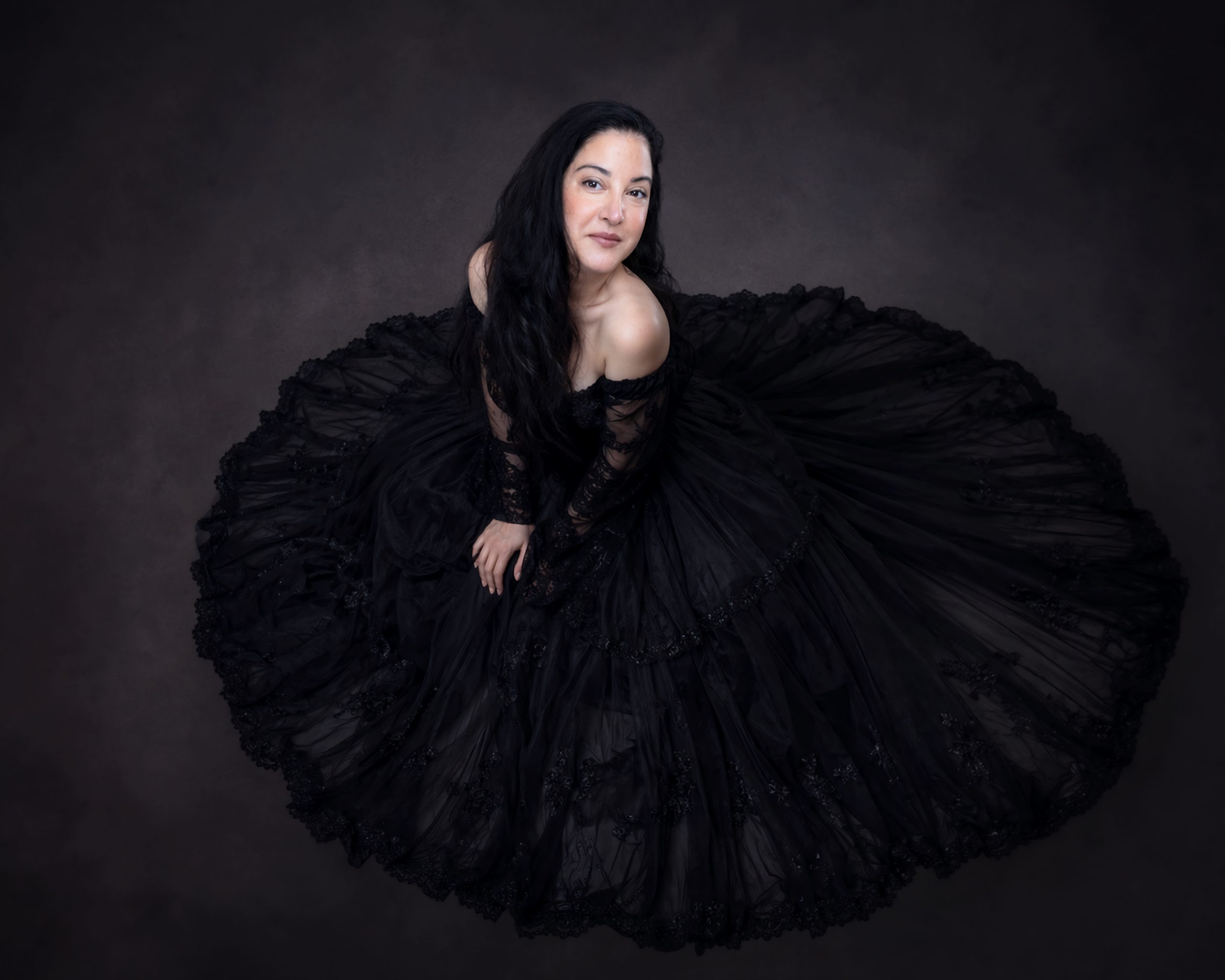
LOCK Magazine recently had the pleasure of speaking with emerging singer-songwriter Lala Vale to discuss the inspiration behind her debut single ‘Obvious’
Hi Lala Vale, and welcome to LOCK. For our readers, could you please tell us a little about yourself?
I’m a singer-songwriter drawn to timeless storytelling. I love capturing quiet emotional moments that aren’t always spoken about openly, and bringing them out into the light.
My music blends indie pop with touches of dark pop, soul, and cinematic elements. It’s not easy for me to define it by a single genre. I’m inspired by a wide range of musical worlds.
Your debut single, “Obvious” captures such a quiet, intimate kind of heartbreak. What first inspired you to write this song?
“Obvious” came from that painful space where you already know something is wrong, but you’re still searching for confirmation. It’s about emotional distance that isn’t dramatic or explosive—just a slow realization that something meaningful is slipping away while you’re still trying to hold onto it. I wanted to capture that internal dialogue we often have with ourselves before we’re ready to face the truth.
Your sound blends indie pop, neo-soul, and classic soul influences beautifully. Which artists or records most inspired the sonic world of “Obvious”?
My music is heavily influenced by the ’70s and ’80s rock and pop vinyl records I grew up with at home—there were hundreds of them: Queen, Pink Floyd, David Bowie, Dire Straits, The Police, Diana Ross, Fleetwood Mac, ELO, and so many more that I just loved.
Later on, performing with jazz ensembles added another layer to my musical world, bringing more depth, soul, and sensitivity to phrasing and emotion.
Before releasing your own music, you spent years performing in jazz bars. How did singing artists like Billie Holiday, Ella Fitzgerald, and Nina Simone shape your voice and storytelling style?
Performing songs by artists like Billie Holiday, Ella Fitzgerald, and Nina Simone taught me that technical ability is only part of singing. What really matters is emotional intention. They each had a way of making every phrase feel lived-in and truthful. That deeply influenced how I approach both singing and songwriting—I always try to serve the emotion first.
The final question in the song, “Are you taking me for granted? Or do you take me for a fool?” leaves things unresolved. Why did you choose not to offer closure?
Because real life rarely gives us neat emotional endings. Sometimes the hardest moments are the ones suspended in uncertainty, when you don’t yet have the answer or the courage to act on what you already suspect. Leaving the song unresolved felt more honest to that experience.
Your experiences adopting two children with special needs and working in animal rescue seem deeply connected to themes of empathy and emotional truth. How have those experiences influenced your songwriting?
These experiences shaped who I am. On a mental level, they gave me the drive to write, because I needed a way to release what I was carrying inside. I would sit at the piano, and the words and melodies would simply come out of me.
Beyond that, they made me much more attentive to vulnerability and patience, and taught me to notice subtle, complex emotional nuances that exist all around us.
“Obvious” feels cinematic, almost like a scene from a late-night film. Do visual images or memories play a role in your writing process?
Absolutely. I wrote “Obvious” from the perspective of two people lying in bed together, under the same blanket—the most intimate space. The blanket represents both safety and warmth, but also the place where emotional and physical distance becomes most noticeable.
The song focuses on small, intimate moments that reflect this contrast—an accidental ankle touch, lying back to back, and other subtle gestures that reveal the growing distance between them.
As a newer artist stepping into the spotlight with such emotionally raw material, was it intimidating to be this vulnerable in your debut releases?
Ohh, definitely. My material speaks the words we don’t always dare to say out loud, and sometimes it even makes people move uncomfortably in their seats. There is always a dilemma about what to reveal and how much to reveal, but I’ve come to understand that this is simply my way of creating—and probably the only way I can create.
Many people stay in relationships long after emotional connection fades. Why do you think that experience resonates so universally?
I think that beyond the fear of hurting the other person, it’s also about confronting your own fears, attachment patterns, hopes, and identity within the relationship. People hold on not only to what exists, but to what they hoped could still become possible. That tension between reality and hope is incredibly universal.
If “Obvious” is listeners’ first introduction to Lala Vale, what do you hope they understand about you as an artist after hearing it?
I write for people with lived experience who are navigating complexities they don’t always feel comfortable talking about. I want them to feel seen and at ease within that vulnerability, without trying to beautify it—just to look at themselves honestly in the mirror, and perhaps find the courage to shift their reality.