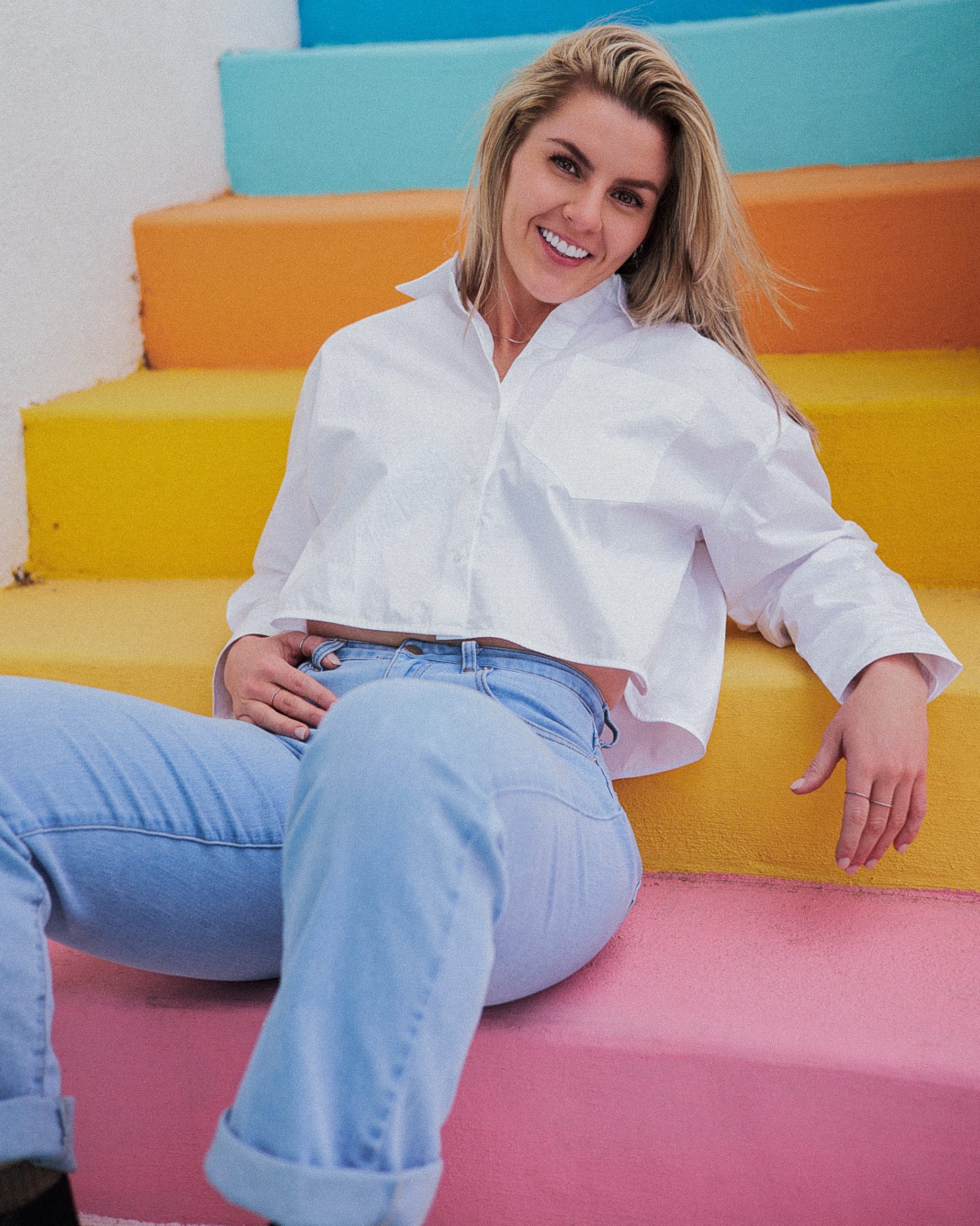
Chicago-based singer-songwriter and producer Kylie DeWees turns the complexities of modern relationships into infectious indie alt-pop. Her latest single, ‘49/51’, transforms the frustration of being someone’s almost into a playful yet vulnerable exploration of rejection, uncertainty and self-worth.
For LOCK, we caught up with Kylie to discuss the inspiration behind the single, creative independence, authentic LGBTQ+ representation and learning to recognise your own worth.
‘49/51’ was inspired by a particularly ambiguous moment in a relationship, when someone described ending things as a “49/51” decision. What was it about that phrase that stayed with you, and how did you turn such a frustratingly uncertain experience into a song that feels so catchy and playful?
At the time, it really hurt, almost like losing her early made me wonder more about what we could’ve been. I remember thinking, so I was only one percent away from a completely different outcome? Being almost chosen can sometimes be harder than a definite no because you’re left wondering what holds that one percent. It felt wild to put numbers to something as complex as emotions and as I moved on, I wanted to have some fun with it. It’s a song about a haunting kind of rejection, but I didn’t want it to feel like defeat.
One of the most striking aspects of ‘49/51’ is the contrast between its upbeat indie alt-pop production and the vulnerability of its lyrics. Was that contrast intentional from the beginning, and did transforming the original acoustic version into something more energetic reflect a change in how you were processing the experience?
It actually started as a pretty simple acoustic song. Over time, I started playing around with the production and added guitars, synth bass, and even some bamboo-inspired percussion.
The song changed as my feelings did. At first, all I could think about was the rejection. By the time I finished it, I’d stopped waiting for someone to change their mind. I love that the lyrics are still vulnerable and the music makes you want to dance. It felt good to make something fun out of something that hurt.
There’s still a piece of me that wonders, though, and I think you can hear that in the way the song never quite resolves. Grief comes in waves after a relationship ends. Some days you feel like you’ve moved on, and then it hits you again. I wanted both of those feelings in the song, all the way through the end.
You’re an artist who writes, performs and produces your own music, taking complete creative ownership of the final sound. How important is that independence to you, particularly as a woman working in a music industry where female producers are still underrepresented? Have you ever felt you needed to prove yourself in the technical side of music-making?
Producing my own music is incredibly important because I usually have a specific sound in my head, and I love being able to control the emotional arc of the song.
I’ve been teaching myself music since I was a kid, and I’m still learning something new every day. I think there’s sometimes an assumption that if a woman is singing on a track, someone else must be producing it. I love being able to say I wrote, performed, and produced my own music. Not because everyone needs to do everything themselves, but because I want other women to know they can.
As an LGBTQ+ artist, your songwriting explores relationships and emotional experiences that don’t always fit neatly into conventional narratives. How important is authentic representation in your music, and do you feel the independent music scene is becoming a more welcoming space for queer female artists?
Authenticity is incredibly important to me. I came out about ten years ago to my Catholic Deacon father, so being able to write openly about my LGBTQ+ relationships means a lot. I write the songs that I wish I had been able to listen to growing up. I also love that heartbreak, love, and rejection are universal. You don’t have to share my exact experience to connect with “49/51.”
It’s exciting to see more queer women making music on their own terms. There’s still room for growth, but I love seeing artists who aren’t afraid to be authentically themselves.
You draw inspiration from artists as diverse as Dua Lipa, Remi Wolf, Benee, Christine & the Queens and Chelsea Cutler. What is it about their artistic approaches that resonates with you, and how do you balance those influences with your desire to develop a sound that is entirely your own?
I love that they each have such a distinct personality. Remi Wolf’s creativity, BENEE’s production, Dua Lipa’s melodies, Christine & the Queens’ artistry, and Chelsea Cutler’s personal songwriting all inspire me in different ways.
Creating my own sound is honestly one of the most exciting parts of being an artist. Indie and alternative pop feel most like home, but I don’t want to lose the curiosity that made me fall in love with making music in the first place, so watch out for some dance pop coming soon too!
There’s a beautiful sense of self-acceptance in ‘49/51’, particularly in the decision to let go rather than keep waiting for someone to choose you. Has making music become a way of reclaiming your own narrative and turning difficult experiences into something empowering? And what would you like listeners to take away from this new chapter of your artistry?
Absolutely. I’ve been writing music since I was 12, and it’s always come from the deepest parts of me and how I’ve processed emotions best.
With “49/51,” I started out wondering why someone didn’t choose me. But eventually, I realized I was so focused on whether they wanted me that I wasn’t asking myself whether I wanted someone who was that unsure about me.
I hope listeners remember that they deserve more than being someone’s 49 percent. And sometimes the best thing you can do with a bad dating experience is turn it into a catchy pop song. At least then you get something good out of it! Thanks for listening 🙂