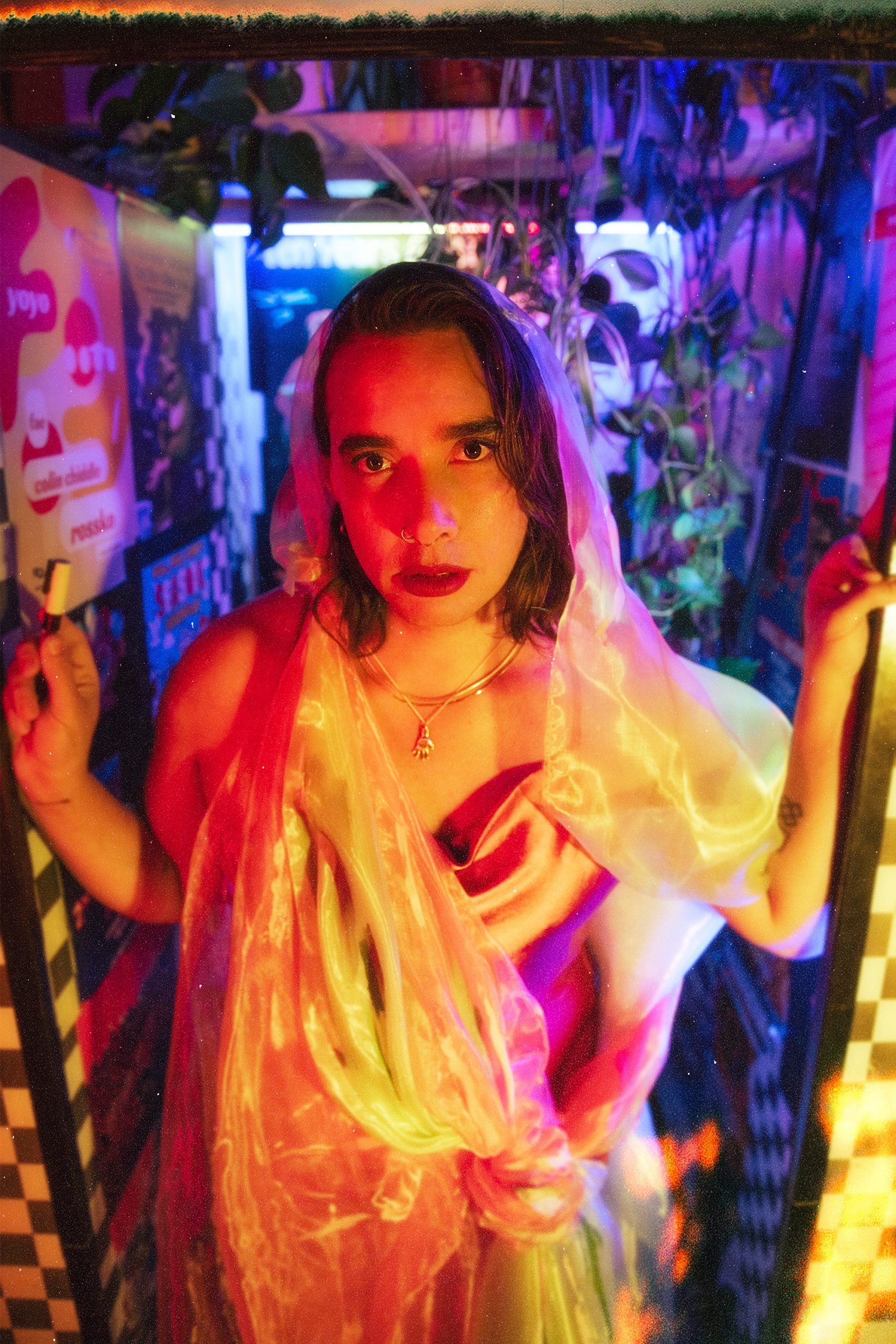
Some debut albums introduce an artist. Others announce a fully realised creative identity. On ‘Rebuild’, London-based electronic artist Dyvr delivers the latter, crafting a deeply personal record that transforms experiences of identity, transition and belonging into an immersive electronic journey. Balancing atmospheric production with moments of euphoric release, the nine-track collection finds a compelling middle ground between introspective songwriting and club-focused electronica.
Built around themes of grief, healing, sisterhood and self-acceptance, ‘Rebuild’ unfolds with remarkable emotional clarity. Rather than relying on grand gestures, Dyvr allows each track to develop patiently, layering shimmering synth textures, understated vocal performances and propulsive rhythms into music that feels equally suited to solitary reflection and the communal release of the dancefloor. It’s an album that understands electronic music’s capacity not only to move bodies but also to carry deeply human stories.
More than simply a debut, ‘Rebuild’ is a statement of intent. It presents electronic music as a space for storytelling, community and healing, while introducing Dyvr as an artist with both a clear creative vision and a remarkable emotional honesty.
We had the opportunity to sit down with Dyvr to learn all about the record, her journey up to this point and much more, exclusively here at LOCK.
—
Hey Dyvr, welcome to LOCK! How are you doing?
Great thanks!
Sum up your album ‘Rebuild’ in three words for our readers!
Communal Dance Cry!
‘Rebuild’ has been three years in the making. Looking back now, how do you feel you’ve evolved as both a producer and a songwriter over the course of creating the album?
Honestly I feel like I evolved from ‘not a producer’ to a producer over those 3 years. When I started I had not real experience of producing, so I was learning while I was writing. I often talk about how my transition and this album sort of grew up side by side. Transitioning was enabling me to be more honest in my music and the album became a way for me to process what was happening with my gender and how I viewed the world around me. It was an honour to make (while also being literally the hardest thing I’ve ever done).
At what point did you realise these songs were becoming part of a much bigger personal story rather than simply individual tracks?
I actually set out with the intention of making an album. I knew I wanted to have this conversation. I knew I wanted transness to be more visible, and I wanted my community to feel seen in a body of work.
‘Cry Baby’ tackles exclusionary attitudes within feminism while celebrating solidarity across the trans community. What conversations were you hoping the track might encourage?
With Cry Baby, I wanted to point at what I believe fuels trans exclusionary feminism. Ultimately I think people are scared to open themselves up to the possibility that gender, like so many aspects of our world, is constructed. If they accept that things could have been different, then it means they didn’t need to feel the pain they have felt. These people would rather make trans identity a threat, than sit and grieve for a life that could have been so much more free. A life that has been taken from all of us, and that trans people are fighting for everyone, especially women to have access to.
Dance music has long been rooted in queer culture. How has London’s queer electronic scene influenced both your sound and your outlook as an artist?
I grew up in North London and London is a main character on this record. My earliest experiences as a teenager in the city were in queer spaces. Queer culture and especially the unique intersections that you find in London, have shaped so much of my perspective. You can hear the blend of culture in the album I think.
Tracks like ‘Sister’ confront difficult subjects with remarkable honesty. Was it ever challenging to revisit those experiences during the writing and recording process?
Well Sister in particular was written in response to some very difficult realities setting in for a lot of trans people. I wrote it after the Supreme Court in the UK decided that the term ‘woman’ could only refer to biological sex. So many of us felt misunderstood and talked over in the days and weeks after that. I felt like my country didn’t want me. Or at least that it didn’t care about my safety. I wrote Sister when I was angry and defiant and I think you can feel that.
Were there any artists, records or scenes that particularly influenced the sonic direction of ‘Rebuild’?
There are so many influences on this record! I feel like the record owes a lot to Robyn. She was kind of the first person to bring tears to the dance floor in the way that I do. Also the 90s UK Garage scene, which was such a big part of my musical language growing up. There are moments which nod to UK producers like Burial. There are also influences from trans producers like Eris Drew and Arca. I feel like we could do a whole conversation on just the artists that influenced the album to be honest!
What do you want audiences to feel when they leave a Dyvr show?
My hope always is that people feel seen, connected, and that for just a moment, they can hold two realities and let them exist together without tension. In one reality we are persecuted, marginalised and vulnerable. In the other we are liberated, powerful and united. Being trans means living in both.
The album moves through grief, anger, love and ultimately acceptance. Was there one song that proved the most emotionally difficult – or rewarding – to finish?
I think ‘Your Child’ was probably the most difficult for a lot of reasons. There is a lot of personal pain in that song. I was processing a lot while I was making it and those were some of the most difficult days in the studio for sure. I do feel very proud of it now though. I’m proud of how honest it is.
How would you describe the qualities that make a Dyvr record unmistakably yours?
If the beats are heavy, and you’re crying your eyes out, it’s probably at Dyvr record!
And finally, the dancefloor is often portrayed as a place of escapism, but ‘Rebuild’ suggests it can also be a place of healing. Why do you think electronic music has such a unique ability to bring people together?
I think all dancefloors have the potential to be places of collective grief and release. The bass is moving through your body, you’re opening your hips and feeling held within a crowd. If that place is truly safe, and if you are given permission for your emotions to come to the surface, I believe that you have a genuine opportunity to release pain. Dancefloors are therapy.