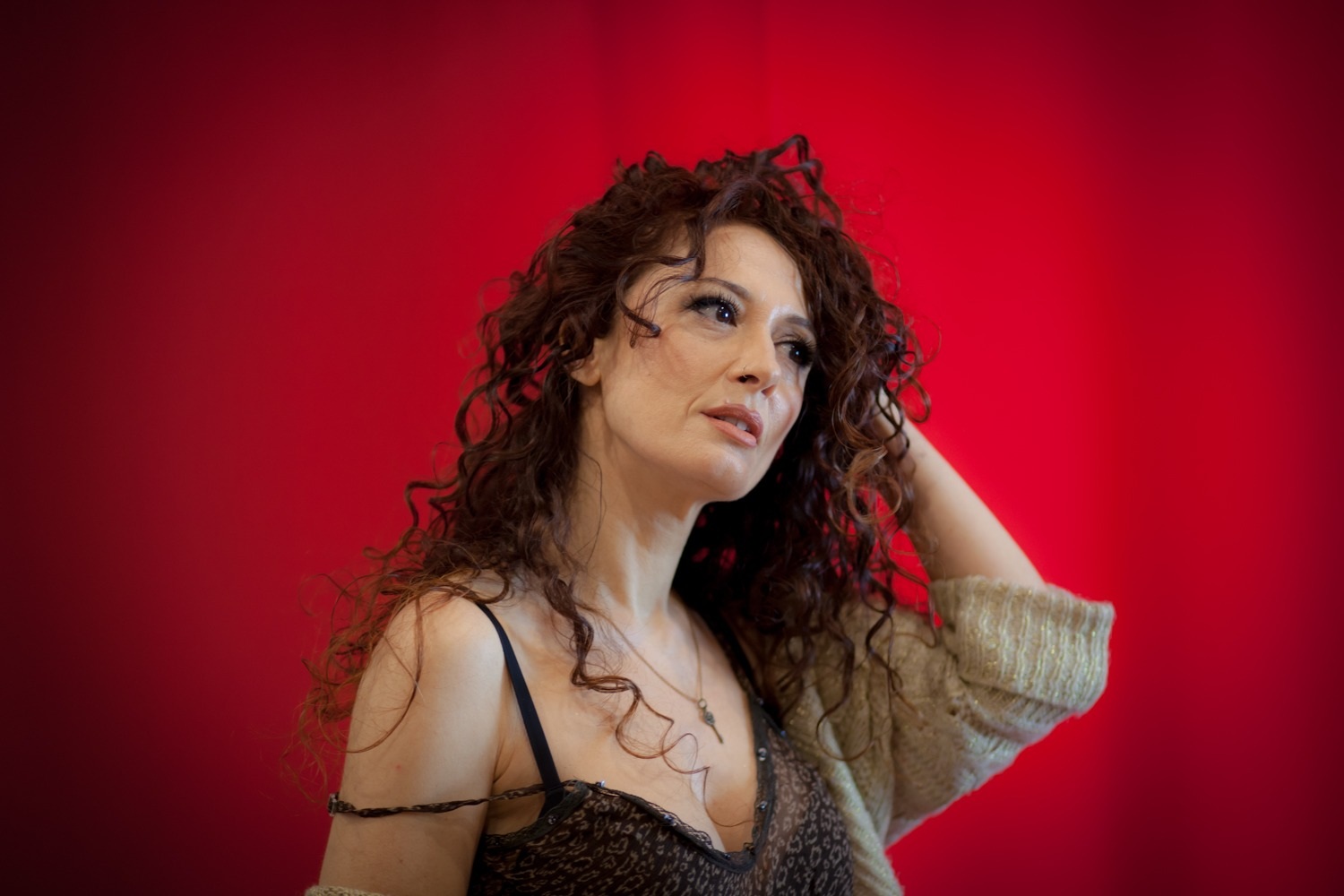
After years spent working within the world music ensemble Tupa Ruja, Martina Lupi steps into a more individual space on ‘Dannate Salvatrici’, a debut solo album that brings together contemporary composition, spiritual folk, chamber jazz and atmospheric sound design.
The record is built around what she describes as the “Sound of Distance”, a concept that treats distance as a charged space between absence and presence. That idea runs throughout the album’s arrangements, where piano, electronics, violin, guitar and voice are often given room to breathe rather than pushed into dense or conventional structures.
And her breathtaking vocal approach is central to that atmosphere. Alongside more traditional singing, she uses overtone techniques and extended vocal textures, allowing her voice to operate both as a narrative instrument and as part of the wider environment. It gives the album an unusual flexibility, moving between lyrical intimacy and something more abstract or ritualistic as it plays.
The presence of Alessandro Gwis on piano and electronics is particularly important in shaping this balance. His playing provides much of the album’s harmonic and spatial foundation, while Michele Gazich’s violin and Mattia Lotini’s guitar and bass add further colour without disturbing its sense of restraint.
Tracks such as ‘Fiamma’ and ‘La distanza’ illustrate her broader interest in transformation, memory and archetypal imagery. Mythology and Jungian ideas inform the writing, but much of the album’s emotional effect comes from repetition, silence and the contrast between acoustic and electronic textures.
As a debut collection, ‘Dannate Salvatrici’ is distinctive without appearing determined to prove its difference at every turn. Its combination of chamber instrumentation, ambient space and expressive vocals creates a sound that feels carefully considered, while the recurring idea of distance gives the record a coherent emotional centre.
Here, Martina Lupi has made an album that is more about transition than anything else. ‘Dannate Salvatrici’ exists in the space between states, and it is in that uncertainty that the record finds much of its character.